Putting 20% down on your next home can make sense, especially if years of homeownership have given you substantial equity, but it is not a requirement and it is not automatically the right use of your cash. A larger down payment can reduce the amount you borrow, lower principal and interest payments, and generally eliminate private mortgage insurance on a conventional loan. Tampa Bay homeowners should still compare those benefits with the cash they will need for closing, insurance, moving, repairs, and the transition between homes.
Repeat buyers are in a very different financial position from many first-time buyers because they may have equity available from a home they already own.
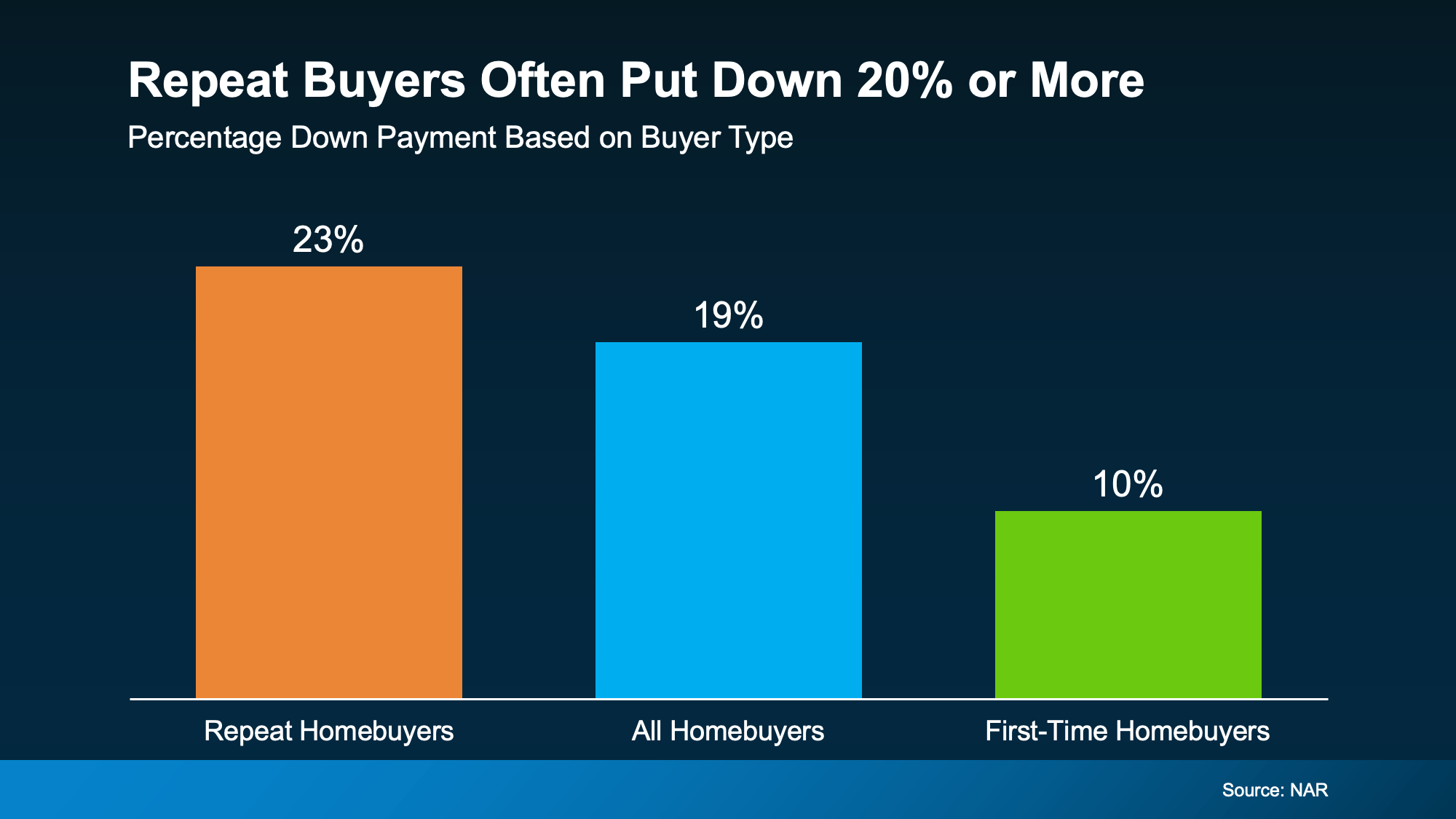
The latest National Association of Realtors Profile of Home Buyers and Sellers reports a 23% median down payment for repeat buyers, compared with 19% for all buyers and 10% for first-time buyers. That difference is one reason home equity can materially change the options available for a homeowner’s next purchase.
Equity is the difference between a home’s value and the debt secured by the property. But the amount of equity on paper is not necessarily the amount available for the next down payment.
A homeowner planning a move should start with the expected sale price, then account for the mortgage payoff, selling expenses, negotiated buyer credits, and other transaction costs. A property-specific home-value review can help establish a more realistic starting point than simply looking at an online estimate.
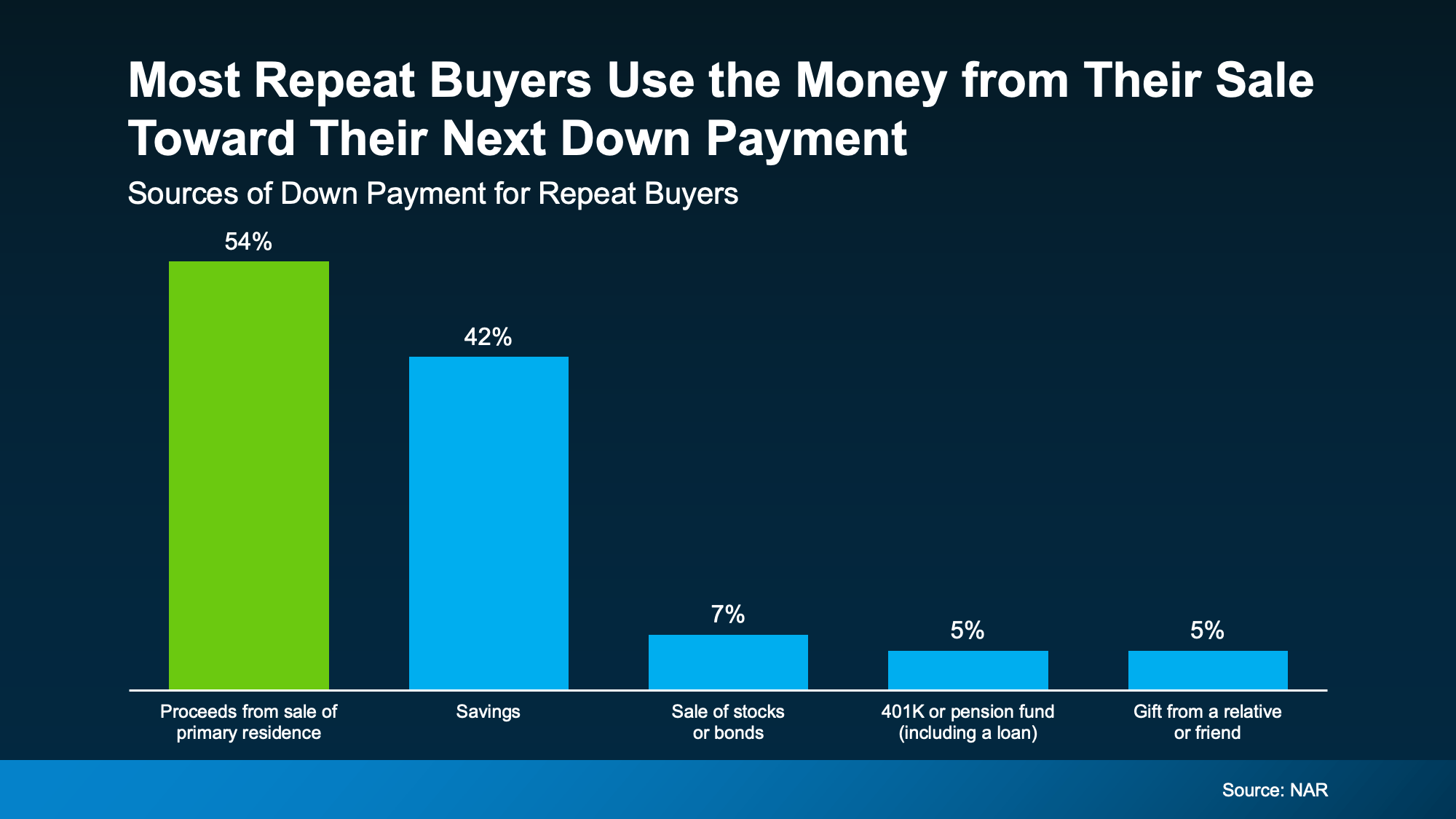
NAR reports that 54% of repeat buyers used proceeds from the sale of a primary residence toward their down payment, while 42% used savings. For many repeat buyers, selling the current home is what makes a larger down payment possible.
The clearest benefit is simple: a larger down payment means a smaller mortgage.
For example, putting 20% down instead of 10% reduces the amount financed by another 10% of the purchase price. Assuming the same loan term and interest rate, that lowers the principal and interest payment and reduces the amount of interest charged over time.
Another consideration is private mortgage insurance. With a conventional loan, a buyer putting less than 20% down will commonly be required to carry PMI. The Consumer Financial Protection Bureau confirms that a 20% down payment generally avoids PMI on a conventional mortgage, although loan structures and requirements vary.
A larger down payment may also help with loan qualification or pricing in some situations, but buyers should have a lender compare actual scenarios rather than assume 20% is automatically the most economical choice.
One of the biggest mistakes a repeat buyer can make is focusing entirely on the down payment percentage.
A homeowner might have enough sale proceeds to put 20%, 25%, or even more down, but that does not necessarily mean all available cash should go into the new property. Before deciding, account for money that may be needed for:
This is particularly important for someone selling and buying at roughly the same time. A slightly smaller down payment may be worth considering if putting more down would leave the buyer without adequate reserves.
The lender can compare different down payment amounts side by side, including the loan amount, interest rate, estimated PMI if applicable, cash needed at closing, and projected monthly payment.
If most of your next down payment is coming from your existing home, timing becomes part of the financial strategy.
Selling first usually gives you certainty about how much cash is actually available. Buying first can provide more flexibility in choosing the next home, but it may require qualifying while the existing mortgage is still outstanding or finding another way to access the equity.
Some homeowners coordinate the transactions by getting their current home under contract before making an offer on the next property. Others negotiate closely timed closings or make the purchase dependent on the existing home selling.
There is no single sequence that works for every Tampa Bay homeowner. Our guide to deciding whether to sell or buy first explains the tradeoffs involving proceeds, financing, contingencies, temporary housing, and overlapping expenses.
The important point is to build the selling and buying plans together. You do not want to choose a $100,000 down payment and then discover that your actual sale proceeds, closing timeline, or required reserves make that number impractical.
For homeowners moving from one Florida primary residence to another, the down payment is not the only financial number worth reviewing.
Eligible Florida homeowners may be able to transfer some or all of their accumulated Save Our Homes assessment benefit to a new Florida homestead through portability. According to the Florida Department of Revenue’s Save Our Homes guidance, eligible owners must establish the new homestead within the required timeframe and file the applicable portability paperwork with the county property appraiser.
Portability does not change your down payment, but it can affect the assessed value used for property taxes on the next homestead. Buyers should verify eligibility and filing requirements directly with the appropriate county property appraiser.
No. The better question is what down payment produces the strongest overall financial position for your specific move.
Compare several realistic options, such as 10%, 15%, and 20% down. Look at the difference in cash required, loan amount, PMI, estimated payment, interest rate, and the amount of money remaining after closing.
A larger down payment becomes more attractive when it meaningfully improves the mortgage while still leaving adequate reserves. A smaller down payment may be more practical when preserving liquidity is important or when the additional cash would provide little improvement in financing.
The goal should not be reaching an arbitrary percentage. It should be structuring the purchase so the payment, cash requirement, reserves, and timing all work together.
No. Many mortgage programs allow qualified buyers to purchase with less than 20% down. The right amount depends on your loan program, finances, available equity, monthly-payment goals, and the amount of cash you want to retain after closing.
On a conventional mortgage, a 20% down payment generally means PMI is not required. Other mortgage programs have different mortgage-insurance or funding-fee structures, so a lender should compare the specific options available to you.
Start by estimating the sale price and subtracting the mortgage payoff and expected selling expenses. The remaining net proceeds can potentially be used toward the next purchase, but you may want to reserve part of that money for closing costs, moving expenses, repairs, and emergency savings.
Selling first can make your available down payment much clearer because the proceeds have been established. Buying first may still work when financing and reserves support it, but the 2 transactions should be evaluated together before you commit to a sequence.
Eligible Florida homeowners may be able to transfer some or all of their Save Our Homes assessment difference to a new Florida homestead. The rules, deadlines, and application requirements should be verified with the county property appraiser and the Florida Department of Revenue.
Ask JB Realty to evaluate your likely sale proceeds, next-home price range, and transaction timing before deciding how much of your equity should go toward the down payment on your next Tampa Bay home.