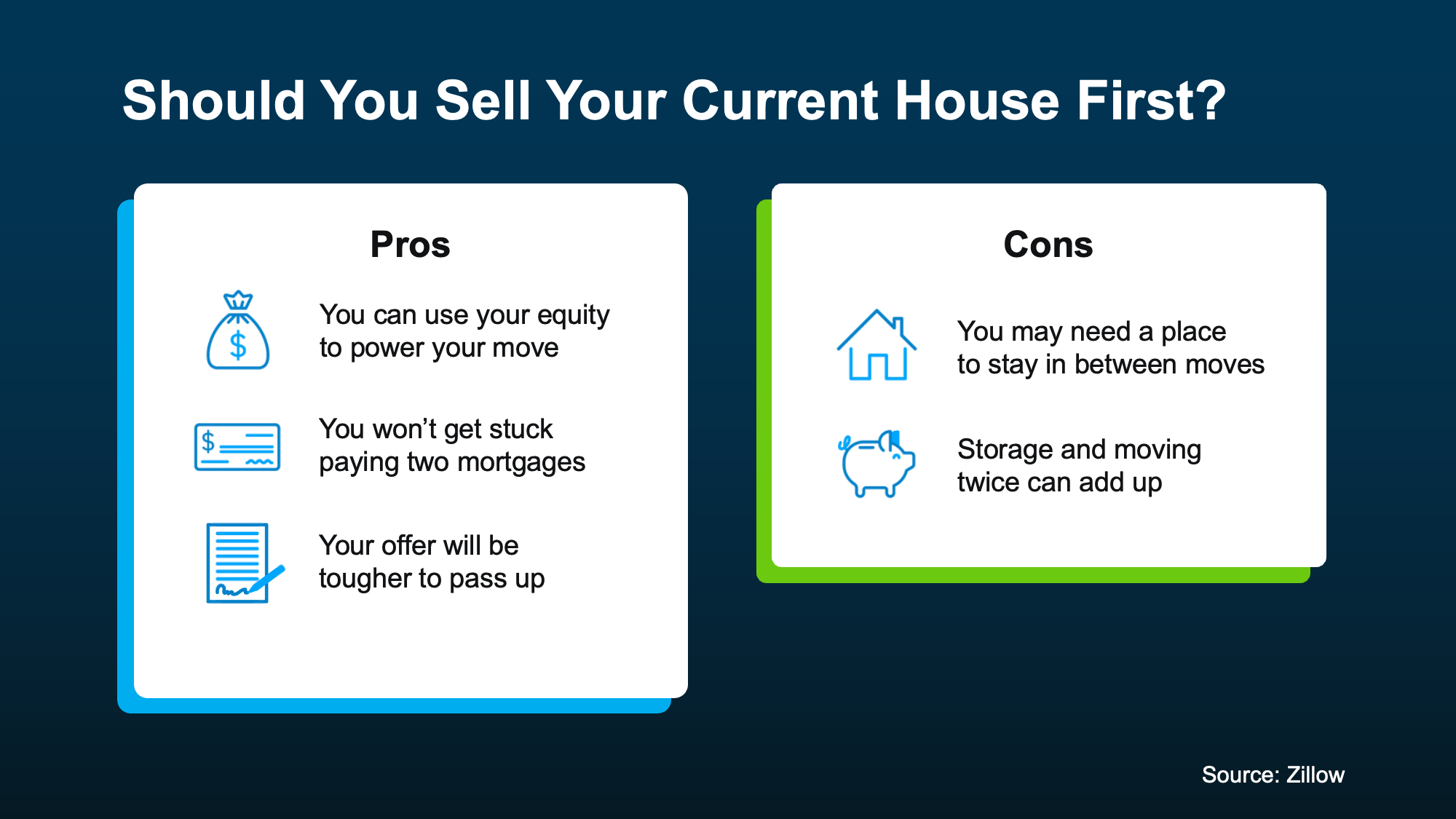
For many Tampa Bay homeowners, selling first is the lower-risk sequence because it establishes the money available for the next purchase and reduces the chance of carrying 2 homes at once. Buying first may make sense when the next home is difficult to replace and the owner can comfortably qualify for and carry both properties. The decision should come from a written plan based on equity, financing, local market conditions, and the time available between closings.
Before choosing a sequence, determine:
A rough online value is not enough. Review comparable sales, active competition, property condition, and expected selling expenses. JB Realty can provide a property-specific home-value review and help estimate the proceeds available for the next purchase.
Ask the lender to compare qualification with the current mortgage remaining versus the home selling before the new purchase closes. This can show whether buying first is realistic or would create too much financial pressure.
Selling first is often more practical when most of the down payment is tied up in the current home, qualifying with both mortgage payments would be difficult, or the seller wants to avoid an extended overlap.
Once the sale closes, the owner knows the actual proceeds available. That makes it easier to set a purchase budget, choose a down payment, preserve emergency reserves, and decide how much flexibility exists for repairs or closing costs.
Selling first can also strengthen the next offer. A buyer whose current home has already closed does not need a home-sale contingency. A buyer whose home is under contract may still present a workable offer, but the seller of the next property will evaluate the status, remaining contingencies, financing, and likelihood that the first transaction will close.
The tradeoff is the possibility of temporary housing or moving twice. Compare the cost of a short-term rental, storage, movers, and an additional move with the cost of 2 mortgages, utilities, insurance policies, and maintenance obligations.
Buying first may be reasonable when the homeowner has substantial reserves, can qualify while keeping the existing mortgage, and is searching for a property that may take time to find. This may apply when the search involves a particular location, waterfront property, multigenerational layout, acreage, or another limited requirement.
The advantage is control over the destination. The owner can secure the next home, move once, and prepare the former home for sale after it is vacant. The risk is that the current home may take longer to sell or require a price adjustment while carrying costs continue.
Before choosing this route, calculate how many months of overlapping expenses could be covered without using emergency funds. Some homeowners explore bridge financing, a home-equity line of credit, or another loan secured by the current property.
These options add costs and repayment obligations. The Consumer Financial Protection Bureau explains that a HELOC uses the current home as collateral, which can put the property at risk if the debt is not repaid. Review any financing strategy with a qualified lender before relying on it.
A move does not always require one closing to occur months before the other. Common structures include:
The National Association of Realtors’ guidance on contract contingencies explains home-sale contingencies, continue-to-show provisions, kick-out clauses, and rent-back arrangements. The exact language and consequences depend on the contract, so proposed terms should be reviewed with the real estate professionals involved and legal counsel when appropriate.
A rent-back or post-closing occupancy arrangement may allow a seller to remain temporarily after closing. Coordinated or extended closing dates may also reduce the gap between transactions.
These terms must be negotiated, documented clearly, and accepted by the buyers, sellers, lenders, insurers, and closing professionals involved. A seller should not assume that post-closing occupancy will be available until it has been agreed to in writing.
The best plan depends on the property type, price range, and neighborhood rather than a single Tampa Bay headline. A single-family home in Riverview or FishHawk may face different competition and buyer demand than a condo in St. Petersburg or Clearwater.
According to Florida Realtors’ June 2026 housing report, Florida had a 4.5-month supply of existing single-family homes and an 8.1-month supply of condo-townhouse properties. That does not predict the result for one Tampa Bay property, but it shows why property type can materially affect the timing plan.
Before buying first, review recent closed prices, active competition, pending sales, days on market, price reductions, and contract fallout for the current home. Before selling first, evaluate how difficult the replacement home may be to find and what temporary housing is realistically available.
A homeowner with a well-positioned single-family property may have more confidence in a predictable sale than an owner whose property type has substantially more competing inventory. The analysis should be based on the specific neighborhood and price range, not statewide averages alone.
Create the selling and buying strategies together. Ask:
The answers should be documented before the home is listed or serious property tours begin. Otherwise, the homeowner may accept a sale contract without knowing where to move or fall in love with another home before understanding whether the purchase is financially possible.
JB Realty’s Tampa Bay selling services and buyer representation can be coordinated under one strategy so pricing, preparation, financing, offer terms, and closing dates are evaluated together.
Selling first is often safer when the down payment depends on current-home equity or carrying 2 mortgages would be uncomfortable. Buying first may be workable when financing, reserves, and replacement-home availability support the additional risk.
Yes. The offer may be contingent on selling or closing the current home, or the buyer may qualify without that contingency. The seller of the next home decides whether the proposed terms are acceptable.
Possible strategies include coordinating closing dates, negotiating post-closing occupancy, or arranging short-term housing. None is guaranteed, so backup housing and storage plans should be established before listing.
Equity becomes available as cash after the sale closes. Some owners may qualify to borrow against their equity before selling, but that introduces additional debt, costs, qualification requirements, and repayment risk.
There is no universal interval. Same-day or closely coordinated closings can work, but delays in the first transaction can affect the second. The plan should include scheduling flexibility and a backup option if either closing is postponed.
Ask JB Realty to evaluate your likely sale proceeds, replacement-home options, financing limits, and timing risks before deciding which transaction should come first.