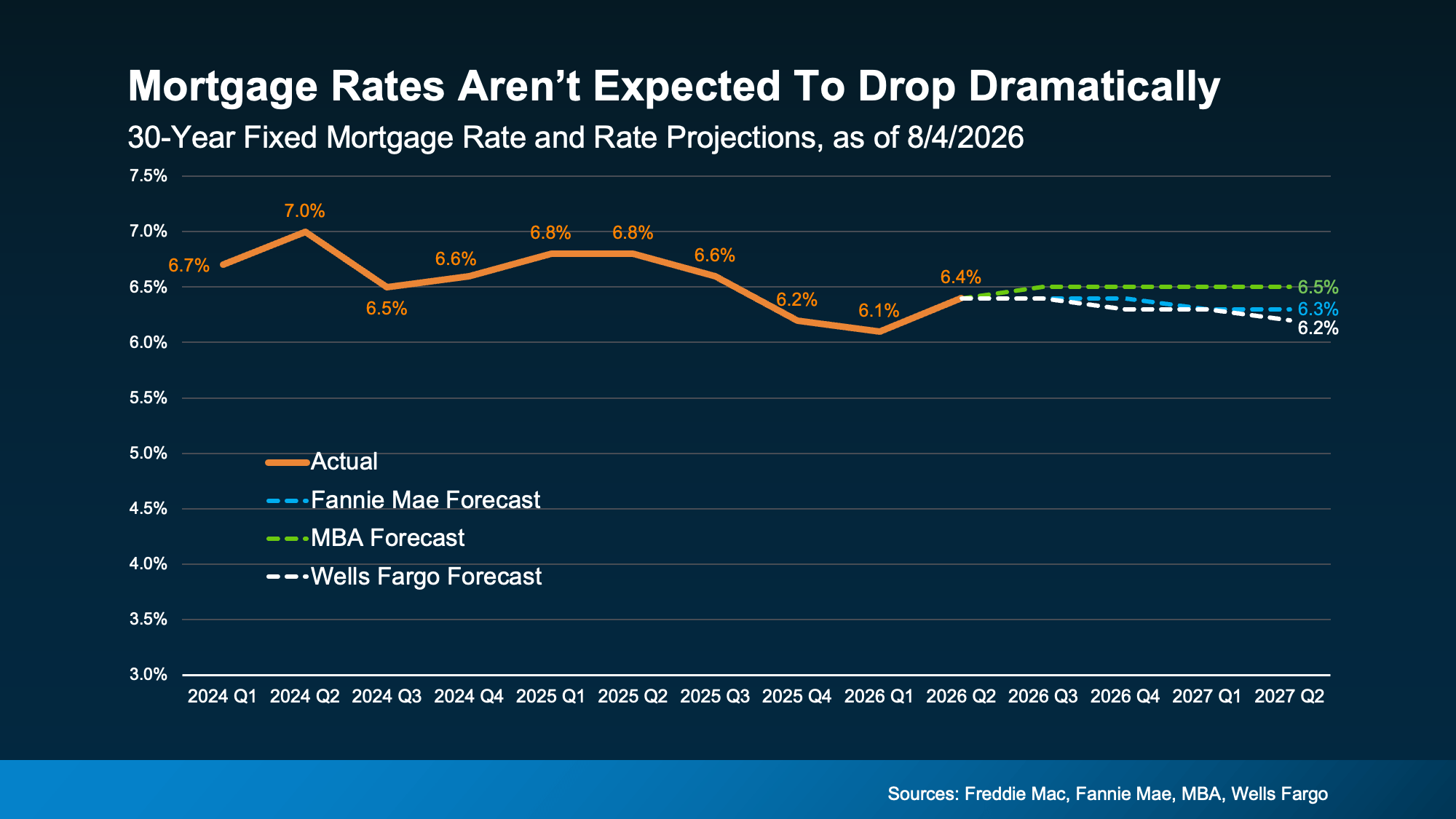
Waiting solely for a major mortgage-rate drop may not improve your buying position. The Fannie Mae July 2026 housing forecast projects the average 30-year fixed rate at about 6.4% through the second half of 2026 and approximately 6.2% to 6.3% during 2027. That points toward gradual movement rather than a dramatic return to pandemic-era rates.
For Tampa Bay buyers, the better question is not simply, “Will rates fall?” It is whether buying at today’s payment, with today’s available homes and negotiating conditions, makes sense for your finances and plans.
According to Freddie Mac’s weekly mortgage-rate survey, the average 30-year fixed mortgage rate was 6.66% as of July 30, 2026. That was slightly higher than the previous week and close to the rate recorded 1 year earlier.
Forecasts can change as economic conditions change. They are useful for understanding the expected direction of the market, but they cannot tell a buyer exactly what rates will be next month or next year.
A national average also is not the rate every buyer will receive. Credit history, debt-to-income ratio, down payment, loan program, property type, occupancy, points, lender fees, and market conditions can all affect the final terms. Our explanation of mortgage-rate factors buyers can control can help you identify which parts of the financing decision deserve the most attention.
Mortgage rates do not move directly with the federal funds rate. They are influenced by Treasury yields, inflation expectations, economic growth, investor demand for mortgage-backed securities, and expectations about future monetary policy.
That is why the Federal Reserve can reduce its benchmark rate without producing an equal decline in mortgage rates. Financial markets may already have anticipated the change, or concerns about inflation and government borrowing may place upward pressure on longer-term yields.
This makes waiting for one Federal Reserve meeting or economic announcement risky. Rates may decline, increase, or move temporarily before reversing direction.
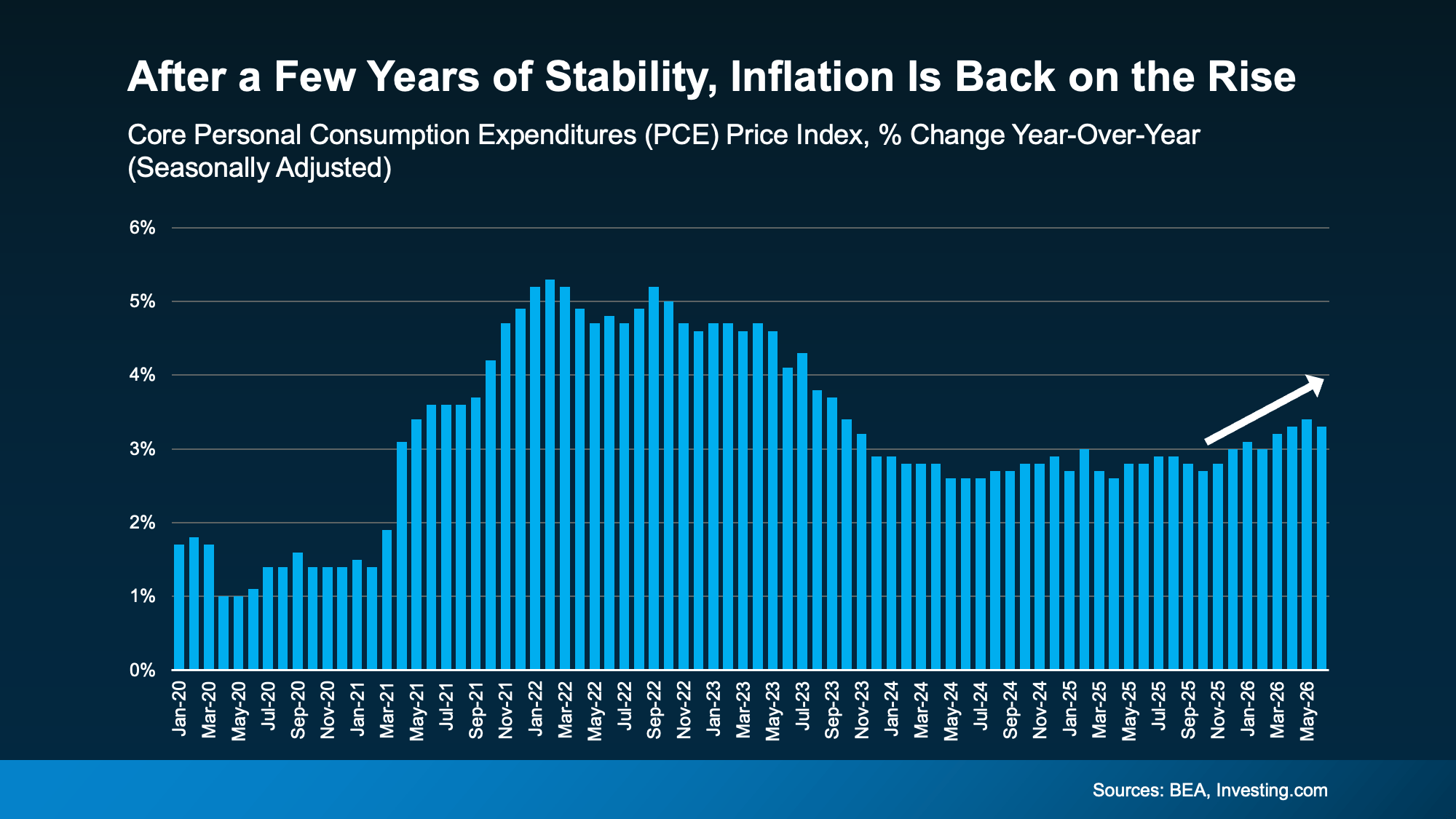
Inflation remains one of the important factors affecting longer-term interest rates, but the data does not always move in a straight line.
The source chart reflects core inflation rising after a period of relative stability. More recent Bureau of Labor Statistics data added another layer to the picture. The overall Consumer Price Index declined 0.4% during June 2026, but it was still 3.5% higher than 1 year earlier. Core inflation, excluding food and energy, increased 2.6% over the same 12-month period.
Those mixed readings demonstrate why a single inflation report cannot reliably predict the next mortgage-rate move. The longer-term trend matters more, and short-term inflation readings can change direction quickly.
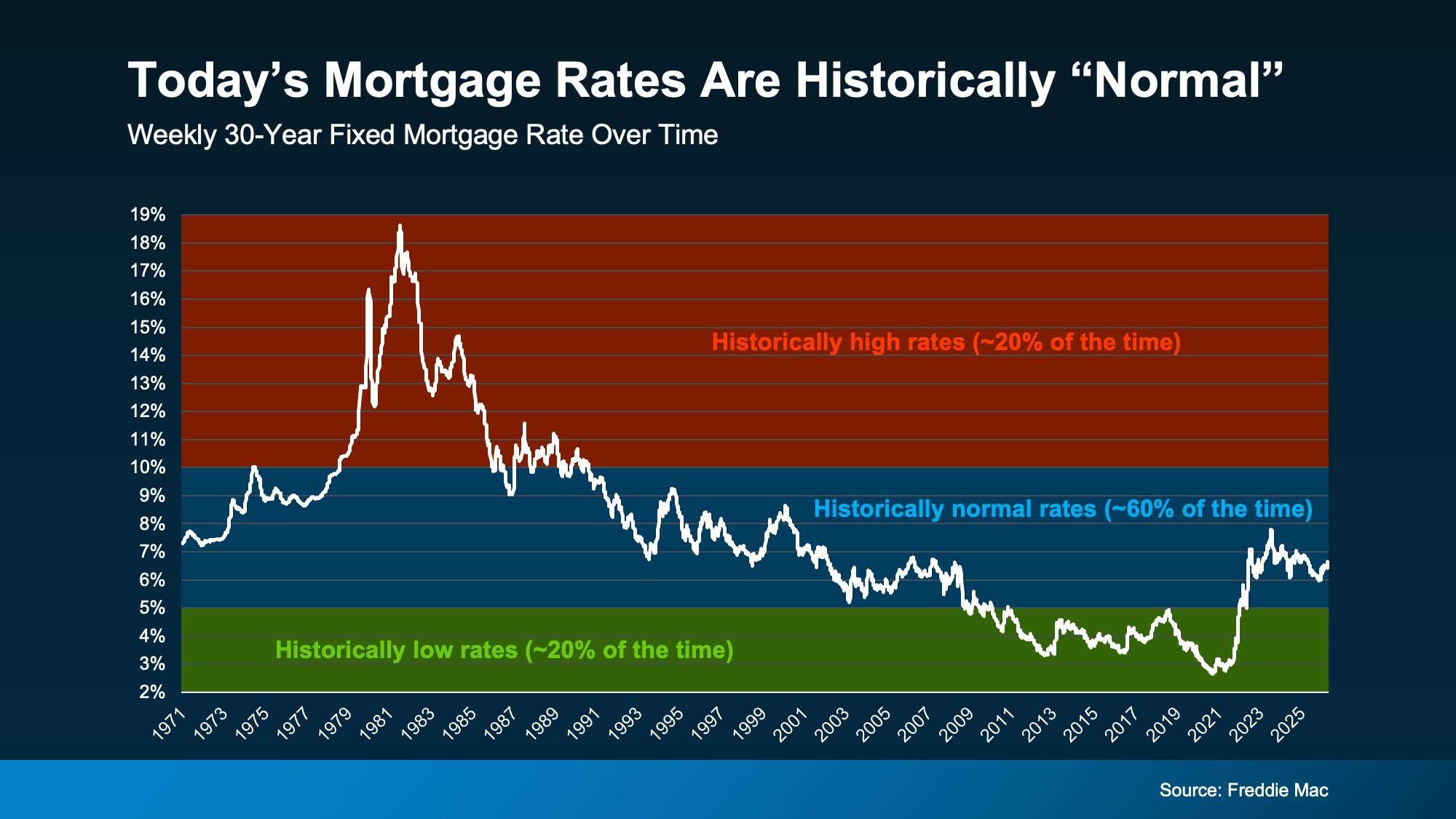
Rates below 3% created an understandable reference point for buyers, but they occurred during unusual economic conditions. Freddie Mac’s historical mortgage-rate series extends back to 1971, while its data shows the average 30-year rate was approximately 3% during 2021.
That does not mean rates cannot eventually fall below current levels. It means buyers should be cautious about building their plans around a return to historically unusual financing conditions.
A home must still be affordable at the rate and payment available when it is purchased. Future refinancing may become possible, but a buyer should not depend on an uncertain refinance to make an uncomfortable payment manageable.
The pandemic period also affected home prices, inventory, buyer competition, and seller behavior. Even when rates fall, improved affordability can bring more buyers back into the market. A lower rate may therefore come with stronger competition or less negotiating leverage.
The exact combination cannot be predicted, which makes pandemic-era rates an unreliable planning baseline.
A lower mortgage rate can reduce principal and interest, but the rate is only one part of the decision.
For a Tampa Bay buyer, the complete monthly cost may include:
A lower rate will not necessarily offset an increase in purchase price, taxes, insurance, or association fees. Similarly, a home with a higher rate but a lower negotiated price or valuable seller credit could produce a more manageable overall cost.
Waiting may be appropriate when the current payment would strain your budget, your employment is uncertain, your savings are limited, or you expect to relocate soon. Those are stronger reasons to pause than an unsupported assumption that rates will be substantially lower within a particular number of months.
Buyers have several options to investigate before putting their plans on hold.
Buying may make sense when you have stable income, sufficient reserves, a comfortable payment, and a home that supports your expected timeline. Waiting may make sense when those fundamentals are not in place.
You do not need to buy simply because a forecast suggests rates may remain elevated. You also do not need to remain on the sidelines solely because someone predicts a major decline.
Ask a lender to calculate several scenarios using different purchase prices, down payments, interest rates, credits, and loan structures. Then compare those numbers with the homes currently available and the costs that apply to each property.
A specific rate target should not be the only factor in your decision. There is no guarantee rates will reach that level within your preferred timeline, and lower rates could bring increased buyer competition. Compare what you can comfortably afford now with the risks and potential benefits of waiting.
Refinancing may be possible later, but it is not guaranteed. Your property value, credit, income, loan balance, market rates, closing costs, and lender requirements will all matter. Purchase only if the current payment works without depending on a future refinance.
No. A temporary buydown reduces the borrower’s payment for an introductory period, while the underlying note rate remains unchanged. A permanent buydown generally uses discount points to reduce the rate for the life of the loan.
An ARM may make sense for some buyers, particularly when the initial fixed period matches their likely ownership timeline. It also creates the risk of a higher payment later, so buyers should compare the maximum possible payment with a fixed-rate alternative.
Start with a payment that leaves room for savings, maintenance, insurance changes, and normal living expenses. Then have a lender estimate the mortgage costs and review property-specific expenses such as taxes, flood coverage, HOA fees, CDD charges, and insurance eligibility.
Ask JB Realty to compare the payment, cash-to-close requirements, available incentives, and negotiating options for the Tampa Bay homes you are considering.