Price reductions and more homes for sale do not automatically mean a housing crash is coming. For Tampa Bay buyers and sellers, national trends become useful when combined with recent local sales, direct competition, and the complete cost of owning a particular home. You can make a sound decision without knowing the market’s lowest point, provided the purchase or sale works under realistic assumptions.
Start by identifying the homes a buyer would realistically consider together. For a Riverview resale, that might include nearby homes with similar size, condition, community fees, and amenities. New construction belongs in the comparison when it offers a practical alternative.
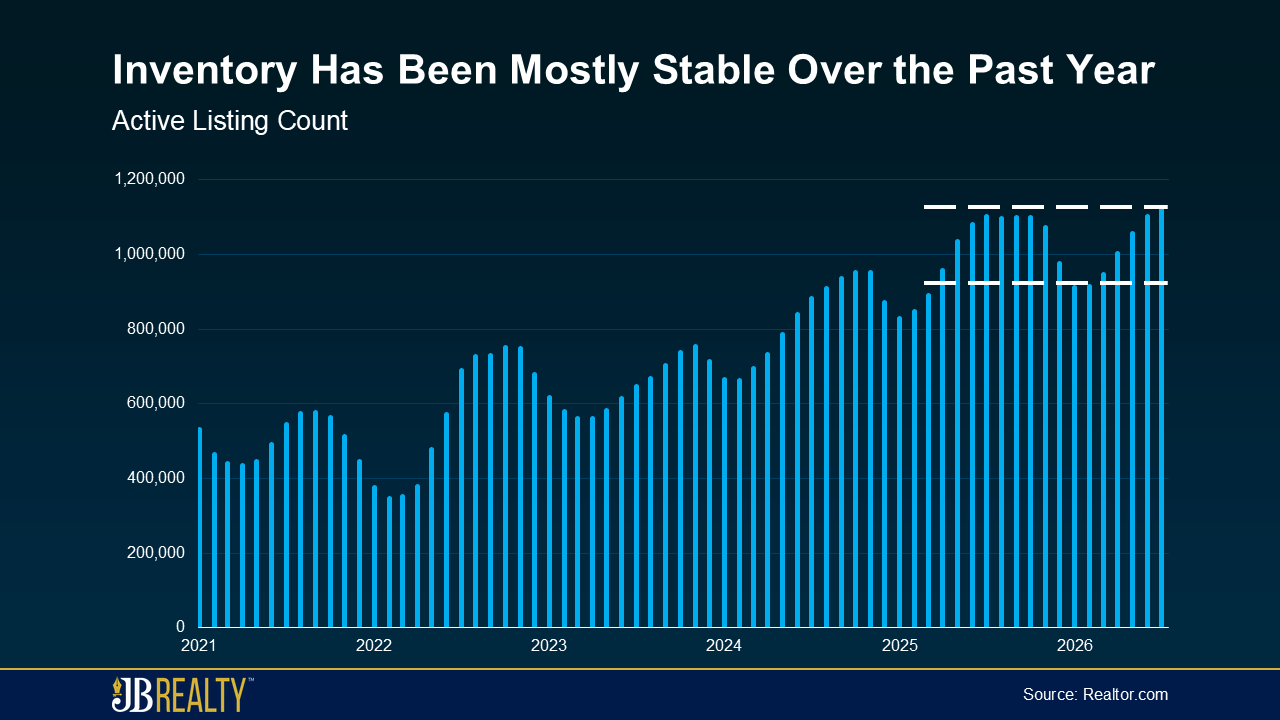
National active listings increased from pandemic-era lows, then moved within a more similar range across 2025 and 2026. That longer view provides context for the choices available to buyers.
Inventory counts available homes. Months of supply adds the sales pace, estimating how long that inventory would take to sell if no new listings appeared. A steady listing count can create different conditions depending on whether buyers are signing contracts quickly or slowly.
Compare active listings with recent closings and pending sales, meaning homes already under contract. Your negotiating position as a buyer depends partly on those alternatives and how quickly comparable homes attract contracts.
Consider a hypothetical home reduced from $450,000 to $425,000. The seller may be correcting an ambitious starting price. To judge whether the revised price is competitive, compare it with recent sales and account for differences in condition, location, and features.
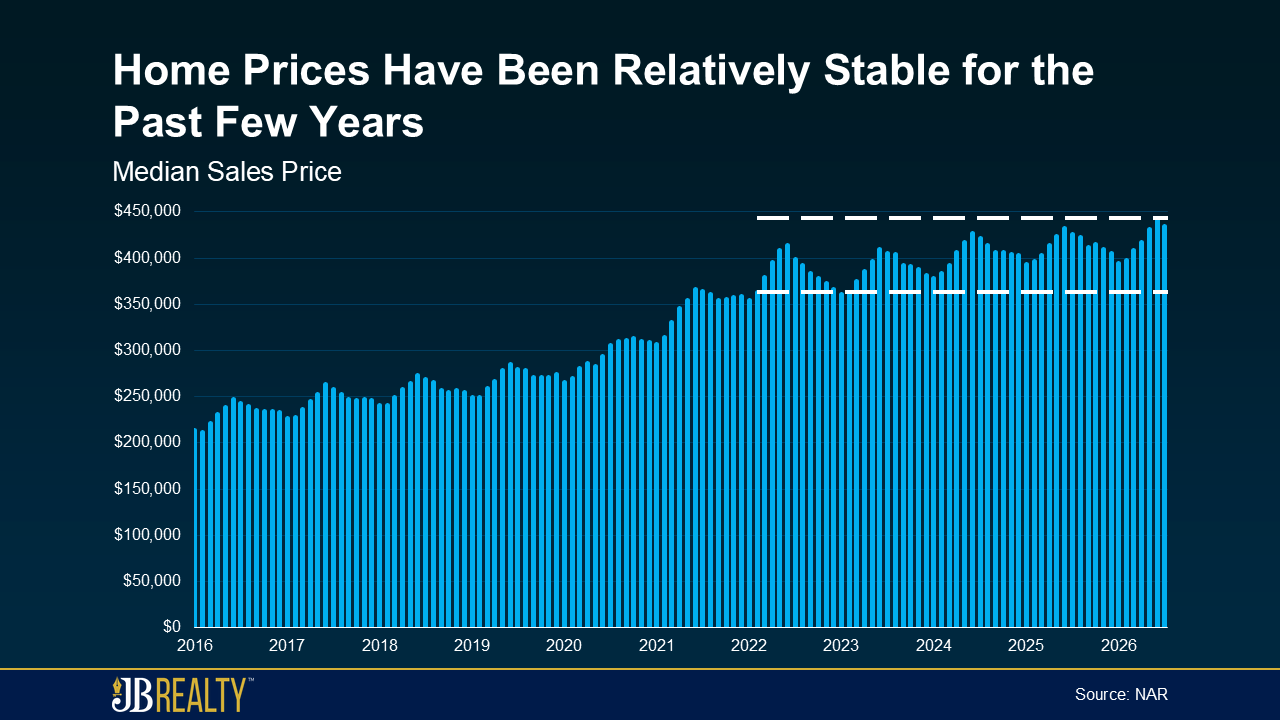
National median sale prices rose sharply around 2020–2022 and subsequently showed seasonal swings within a more consistent band. Individual markets can still move differently within that broader pattern.
For a local reference, Florida Realtors’ July 2026 metro report recorded a $415,000 median sale price for existing single-family homes in the Tampa-St. Petersburg-Clearwater metro, up 2.5% from July 2025. Closed sales were down 0.5%. Those figures cover a four-county region and need to be narrowed to comparable properties before informing an offer.
The median is the middle sale price. It can change because a different mix of homes sold, so a rising median does not establish that every property gained value. Likewise, a price reduction on one listing cannot establish a neighborhood-wide decline.
After the sharp increase in 2022, 30-year mortgage rates spent much of the following period around 6%–7%, with periods above 7%. Those historical ranges provide perspective without establishing where rates will go next.
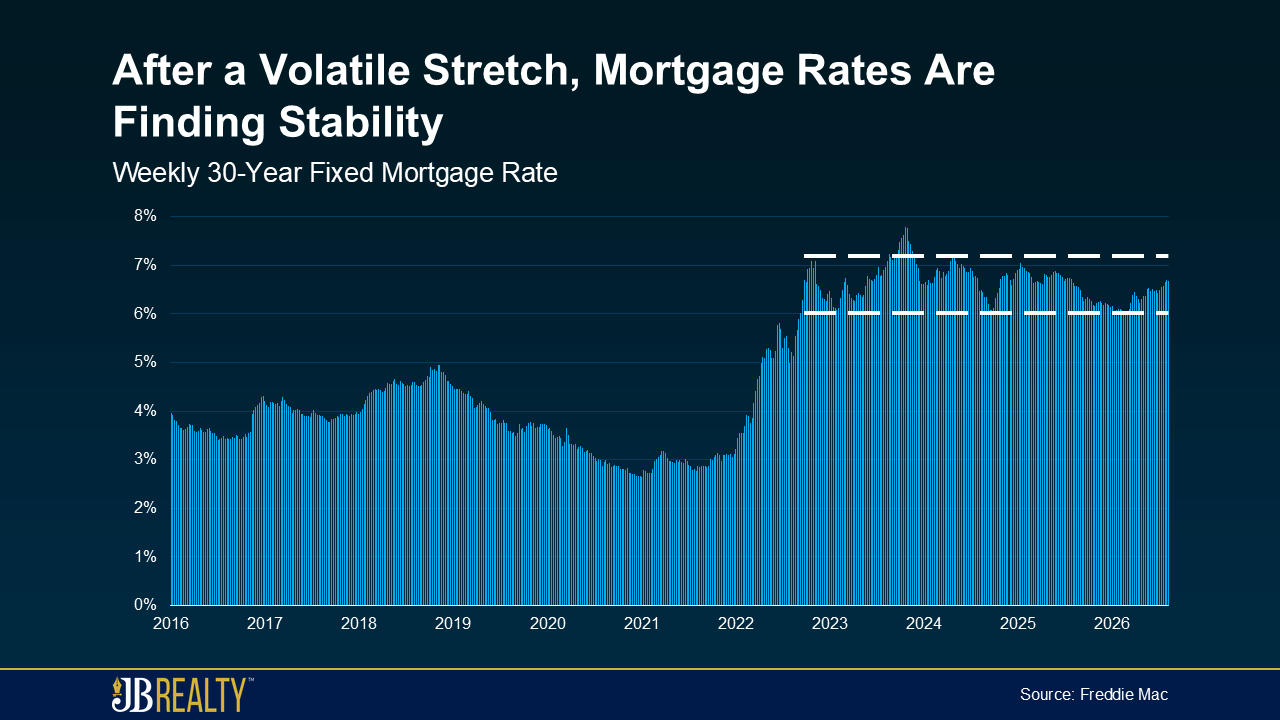
Freddie Mac’s weekly mortgage survey reported a 6.65% average for a 30-year fixed mortgage on August 20, 2026. A national average is a reference point; your lender’s quote depends on your loan, qualifications, and pricing terms.
Build your budget using an actual quote and compare the fees as well as the rate. The payment should work without requiring a future refinance. If a lower rate becomes available later, refinancing would still depend on eligibility, closing costs, and the terms available then.
A purchase price alone cannot tell you whether a home fits your budget. Before committing, obtain property-specific insurance quotes, estimate taxes using the county property appraiser’s resources, and confirm association charges. Ask your lender and insurance agent how any required flood coverage affects the payment.
For homes in a Community Development District, identify the applicable CDD assessments and how they appear in the cost estimate. Check whether charges are already included in the projected tax bill so they are not counted twice. For condos, review the association budget, reserves, assessments, and building insurance with the appropriate professionals.
For example, two homes at the same price could have a $250 difference in combined monthly insurance and community costs. That hypothetical difference adds up to $3,000 a year. Comparing the complete cost can change which property offers better value for your needs.
For buyers, a workable purchase starts with a sustainable payment, cash remaining after closing, and a realistic ownership timeline. Consider whether you could keep the home if selling sooner than planned would produce disappointing proceeds. Our Tampa Bay buyer representation helps connect the property search and offer strategy to those practical priorities.
Sellers should evaluate the homes competing for the same buyers and the proceeds they would retain under different offer terms. A higher price with substantial credits may produce less than a lower price with fewer concessions. Through our home-selling services, we help sellers weigh pricing, presentation, and negotiation together.
No one can reliably guarantee a crash or rule out future price declines. Price cuts, inventory, and mortgage rates need to be evaluated together with local sales and demand. Focus on the properties relevant to your move rather than assuming a regional label predicts every home’s outcome.
Waiting may make sense if you need more savings, a more comfortable payment, or clarity about where you want to live. Waiting specifically for a predicted market bottom creates uncertainty because prices, rates, and available homes can change independently. Compare a purchase you can afford now with the costs and flexibility of continuing to rent or staying in your current home.
A reduction only establishes that the seller changed the asking price. Compare the revised amount with similar recent sales, necessary repairs, ownership costs, and other available homes before deciding what to offer.
Yes, although the outcome depends on the property and the competition. Competitive pricing, clear information about the home’s condition, and flexibility on terms can support negotiations. Evaluate each offer’s likely net proceeds and ability to close alongside its purchase price.
Ask JB Realty to review recent comparable sales, competing listings, and ownership costs for the Tampa Bay home you’re considering before you decide what to offer.