
You may be able to use a 401(k) to buy a home through a permitted loan or an eligible withdrawal. The distinction matters: a loan creates a repayment obligation, while a withdrawal can create taxes and permanently reduce retirement savings. For Tampa Bay buyers, start by confirming the cash actually needed, then compare the options with your lender, plan administrator, and a qualified tax or financial adviser before moving money.
A retirement withdrawal may seem necessary if you assume every purchase requires 20% down. Start with a lender’s assessment of the programs you qualify for and the complete cost of each option.
For example, qualified FHA borrowers may be able to put down 3.5%. On a hypothetical $400,000 purchase, that is $14,000, compared with $80,000 at 20% down. These figures cover only the down payment; closing expenses and other required funds are additional, and the financing options can have different payments and mortgage-insurance costs.
Ask a participating lender to check Florida Housing and assistance programs for the property’s city or county. Confirm current availability, eligibility, and repayment terms before including assistance in your budget. Also discuss whether negotiating seller help with closing costs could reduce the cash shortfall.
The amount worth evaluating is the remaining gap after those comparisons. Preserve room for moving expenses, immediate repairs, and an emergency reserve when deciding what you can commit.
If your plan offers loans, a compliant 401(k) loan generally avoids immediate income tax and must be repaid with interest. Under the IRS rules for retirement-plan loans, repayment is generally required within 5 years, although a loan to purchase your principal residence may allow a longer term. The available amount depends on plan rules, your vested balance, and existing loans.
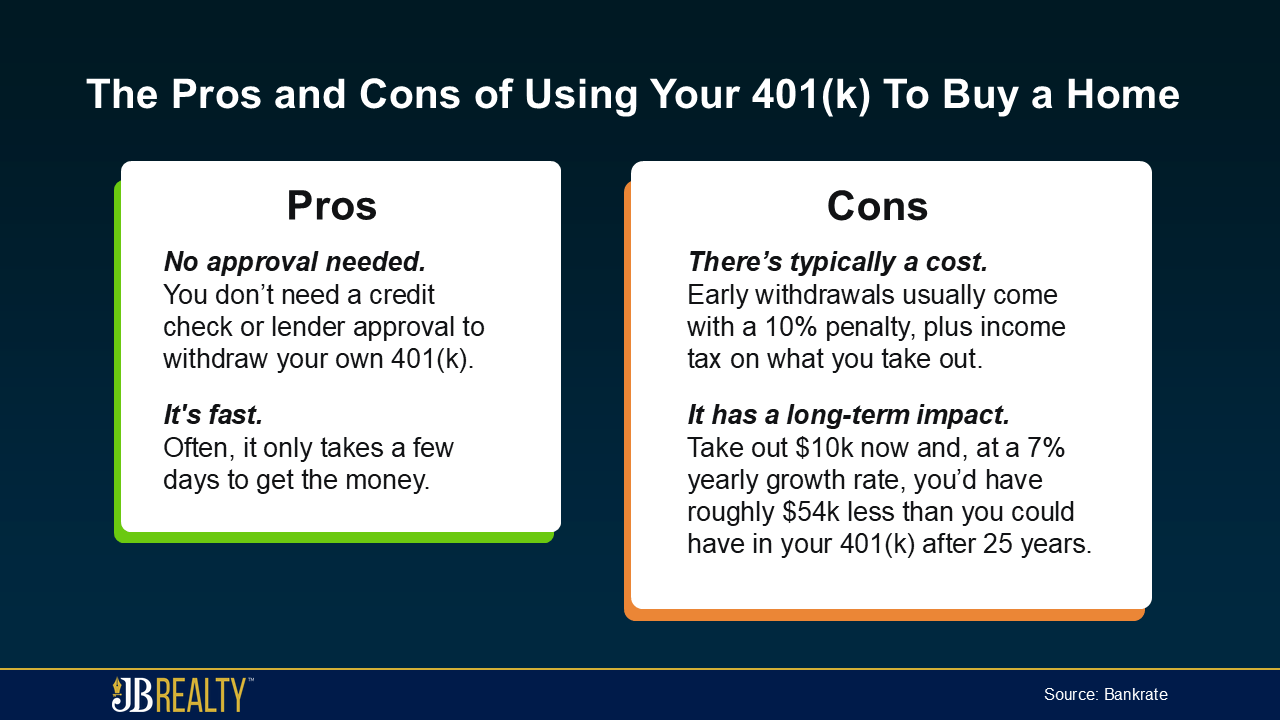
A withdrawal of pre-tax funds is generally subject to income tax. Before age 59½, an additional 10% early-distribution tax usually applies unless an exception qualifies. The IRS early-distribution exception chart identifies the first-time-homebuyer exception of up to $10,000 as an IRA provision; it does not apply to 401(k) distributions.
A plan may allow a hardship withdrawal for qualifying principal-residence purchase costs. Permission to take that withdrawal does not automatically waive taxes or the additional early-distribution tax. Ask your tax adviser to review your account type and circumstances and estimate the amount you would retain after taxes.
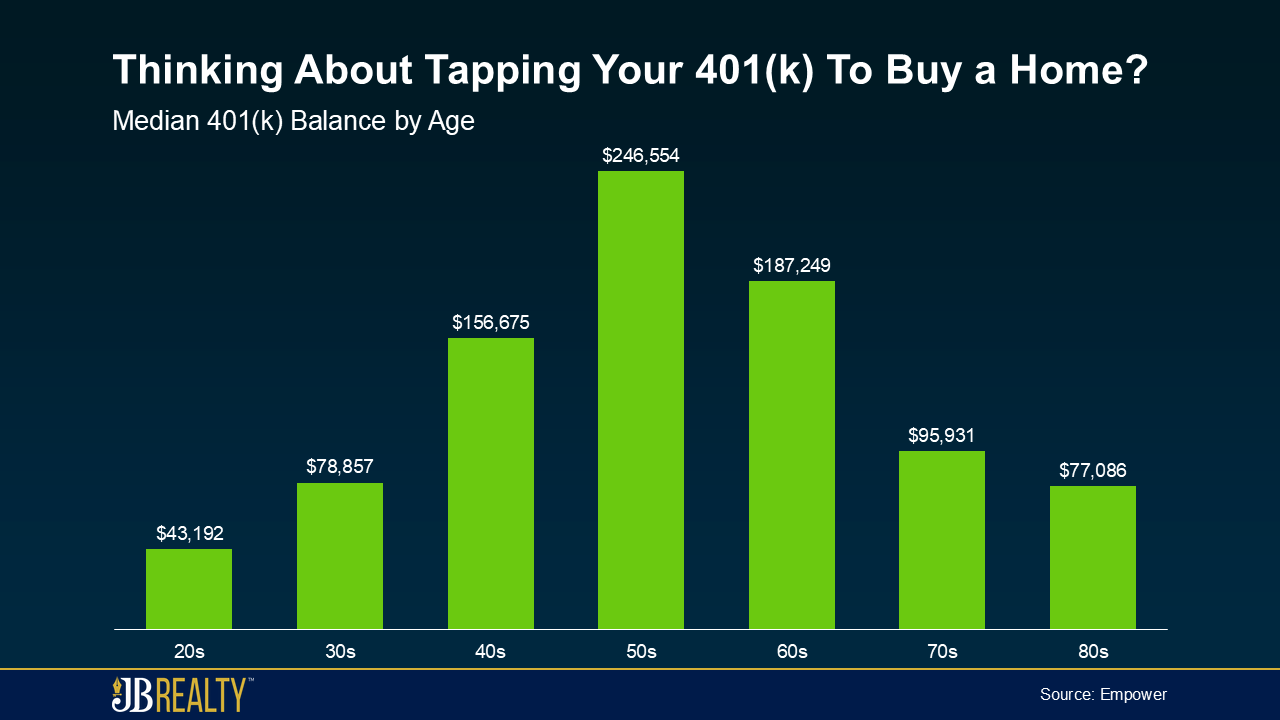
Savings built over years of contributions can make a retirement account look like an accessible solution to a down-payment problem. Empower’s age-group comparison reports six-figure median 401(k) balances for savers in their 40s, 50s, and 60s. Those group statistics do not establish how much any individual buyer can access or afford to use.
A permanent withdrawal also removes money that could remain invested. At a hypothetical 7% annual return compounded for 25 years, $10,000 would become approximately $54,000 before taxes and fees. That ending balance includes the original $10,000, and the assumed return is an illustration, not a forecast.
A permitted withdrawal may avoid a separate credit application, but your plan still controls eligibility and processing. Avoiding a credit check does not remove the plan’s approval requirements or guarantee quick funding.
For a loan, review how repayments would fit alongside the mortgage and other expenses. Consider whether the added payment would cause you to reduce new retirement contributions or miss available employer matching contributions. Your financial adviser can compare the housing benefit with the effect on your retirement plan.
For a Riverview or Apollo Beach purchase, build the budget around property-specific insurance quotes, a tax estimate from the county property appraiser’s resources, and applicable HOA or Community Development District charges. Check official flood information and discuss coverage with your insurance agent. These expenses affect how much cash you should retain after closing.
Before relying on retirement funds in an offer, coordinate these questions:
If borrowing, also ask what leaving your employer would mean for repayment and what happens if you cannot meet the loan terms. An unpaid balance can have tax consequences, so that contingency belongs in the decision.
Through our Tampa Bay buyer representation, we help connect the property search, offer terms, and closing timeline with the financing plan you establish with your lender. Retirement and tax decisions should remain coordinated with the professionals qualified to advise on them.
Buying a first home does not, by itself, create that exception for a 401(k). The qualified first-time-homebuyer exception applies to IRAs. A separate exception may apply to your circumstances, so have a tax professional review the distribution before requesting it.
No. A compliant loan may avoid immediate taxation, but repayments can strain your budget and change how much you continue saving. Compare plan fees, repayment terms, employment risks, and the effect on your retirement goals with the cost of a withdrawal and other funding options.
Certain costs of purchasing a principal residence may qualify if your plan permits that type of hardship distribution and you meet its requirements. The plan administrator determines whether access is allowed. Approval does not automatically make the distribution tax-free or exempt from an additional early-distribution tax.
Tell your lender and real estate broker as soon as you identify the delay. They can help evaluate an approved alternative funding source or discuss revised dates with the other party. Do not assume a deposit or closing deadline changes automatically.
Ask JB Realty to help compare homes, purchase costs, and negotiation options so you can establish the cash needed before deciding with your advisers whether to use retirement savings.