Aging in place can work well when your home can meet your needs through manageable changes and a sustainable budget. Moving may make more sense when the layout, upkeep, or location would remain difficult even after remodeling. For homeowners in Dunedin and nearby Pinellas communities, the decision should compare daily living, available sale proceeds, and the full cost of the next home.
Before pricing a renovation or browsing listings, describe the routines you want your home to support. Consider entering with groceries, reaching the bedroom and bathroom, doing laundry, handling yardwork, and getting to appointments or regular activities.
Separate essential features from preferences. A bedroom and full bathroom on the main level might be essential, while an extra guest room may be negotiable. Think about who could help with maintenance or transportation if your needs changed, and whether you want to remain close to existing friends, family, or church connections.
This gives you a practical standard for evaluating both choices. A smaller home does not automatically solve an awkward layout, and a remodeled bathroom does not solve every challenge of maintaining the property.
Build 2 budgets using written estimates and real replacement-home options.
For staying, include the proposed modifications, related repairs, a contingency for unexpected work, and any temporary accommodations. Add the ongoing costs you would still carry, including routine maintenance and any services you would hire out. Ask contractors to identify the scope, required permits, construction schedule, and which rooms would be unavailable during the work.
For moving, begin with estimated net sale proceeds. Your home's value minus the mortgage is gross equity; the amount available after closing also reflects selling expenses, other liens, and negotiated credits. Our guide to using home equity for your next move explains how to turn that starting figure into a more useful purchase budget.
Then account for purchase closing costs, moving, immediate improvements, and a cash reserve. Compare recurring expenses over the same period, including any new mortgage, property taxes, insurance, association dues, and maintenance responsibilities.
In a hypothetical comparison, a $250 monthly reduction in recurring housing costs would total $15,000 over 5 years. That saving must be weighed against the upfront cost of selling and moving. These are illustrative figures, not local cost estimates, and they exclude appreciation, investment returns, and changes in expenses.
Property taxes deserve a separate check. The Florida Department of Revenue's portability guidance explains how eligible homeowners may transfer some or all of their Save Our Homes assessment benefit to another Florida homestead. The next home's tax bill should be estimated for your circumstances; neither its current owner's bill nor a lower purchase price establishes what you will pay. Ask the Pinellas County Property Appraiser to confirm eligibility, timing, and application requirements.
A useful assessment goes beyond cosmetic updates. Check the entry, interior routes, bathroom access, lighting, flooring transitions, storage, and the location of essential rooms. A qualified remodeling professional can evaluate construction feasibility, while an occupational therapist can help identify changes suited to your functional needs.
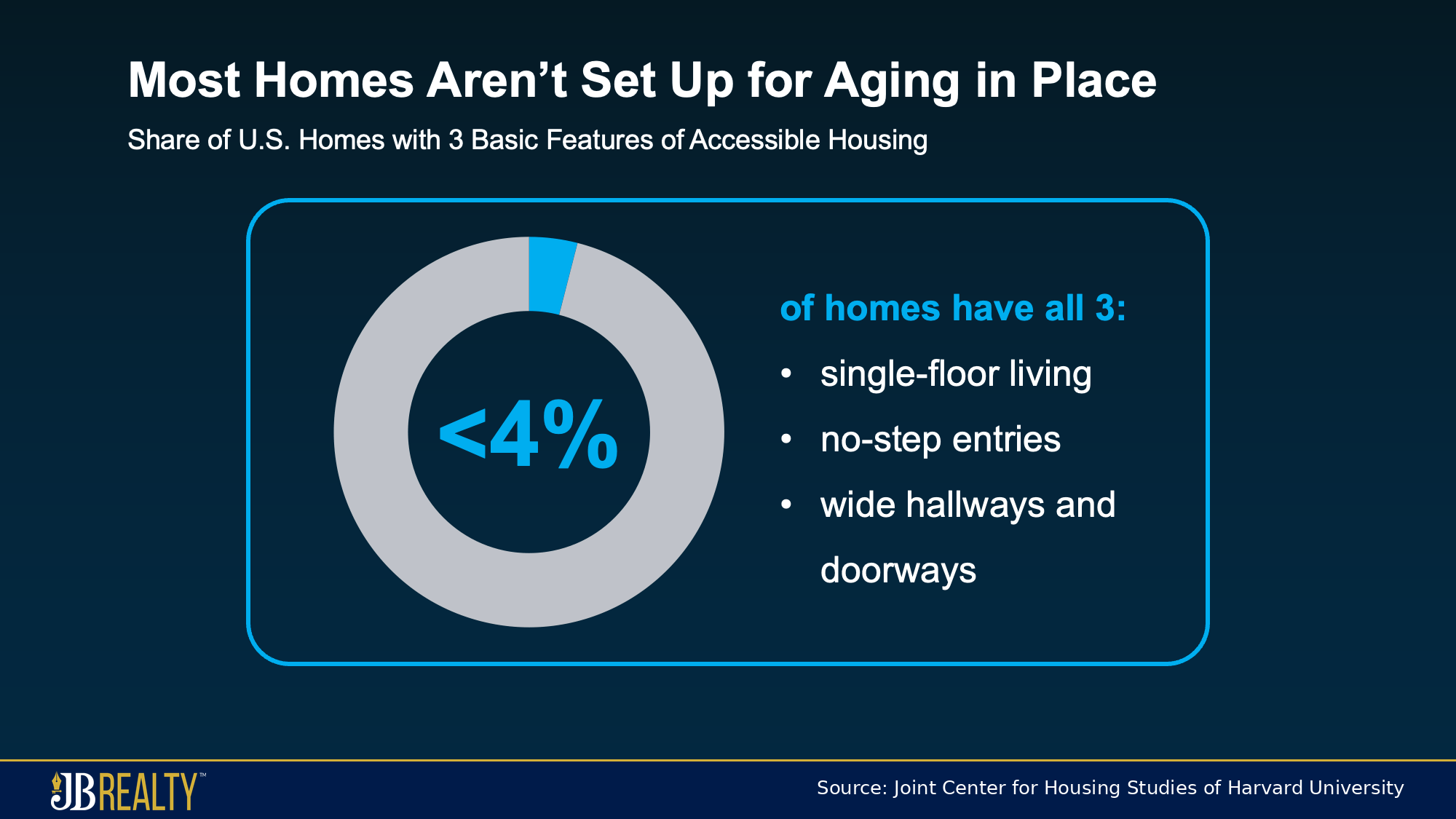
The Joint Center for Housing Studies of Harvard University's 2023 report cites 2011 national data showing that fewer than 4% of homes had 3 foundational accessibility features together: single-floor living, no-step entries, and wide hallways and doorways. That historical figure describes the U.S. housing stock at that time, rather than today's homes in Dunedin or the requirements of every individual homeowner.
The practical question is which barriers exist in your house and what addressing them would require. Installing properly supported grab bars is a different project from relocating a bathroom or changing the route into the home. Obtain property-specific estimates before assuming that either staying or moving will be less expensive.
Also decide how much construction disruption you can accept. Losing access to your only bathroom or kitchen may require a different schedule or temporary housing. A project that works financially still needs to work while it is underway.
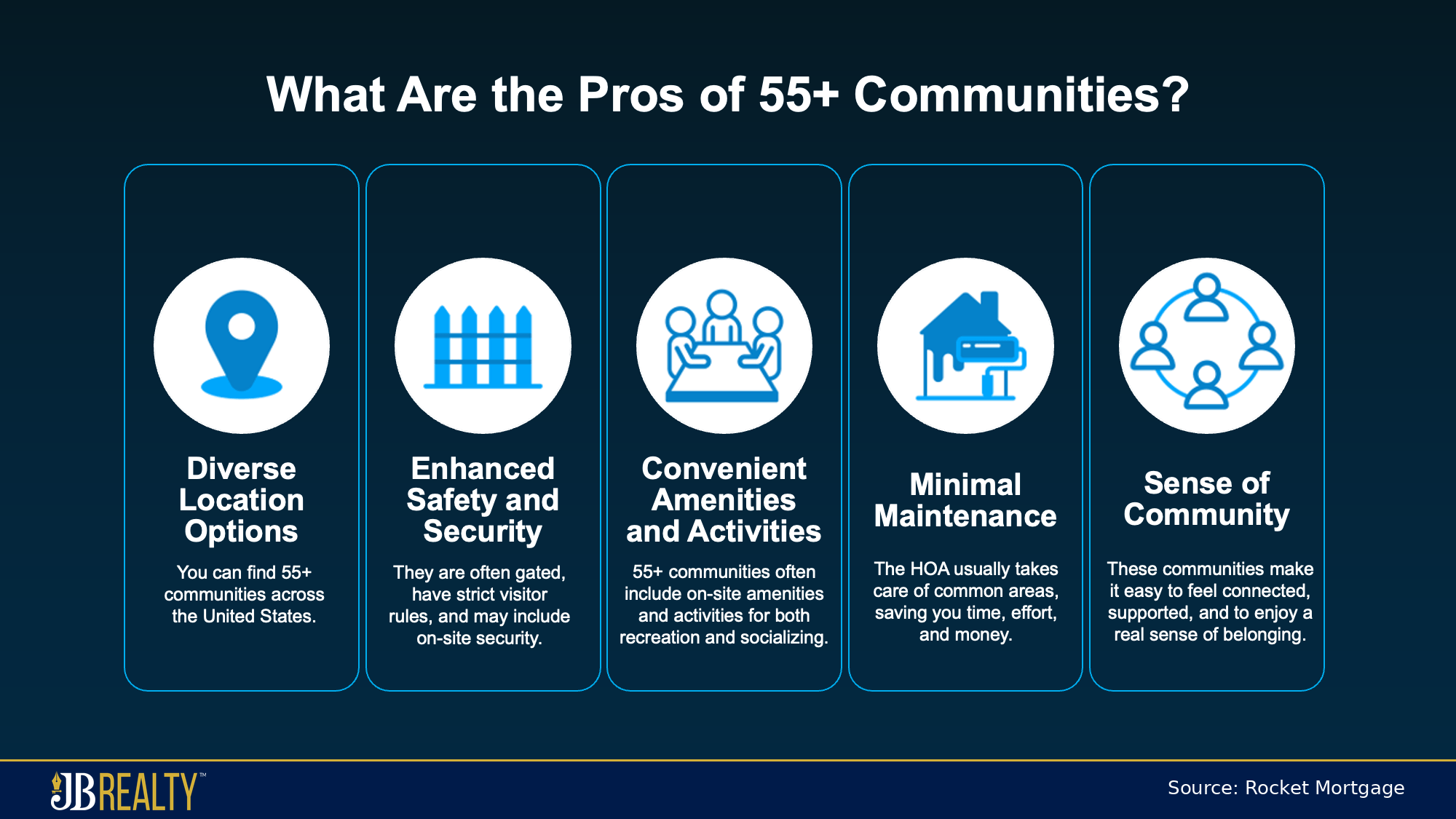
A 55+ community may offer shared amenities, organized activities, or association-managed common areas. Those possibilities can be appealing, but the age designation alone does not establish accessibility, maintenance coverage, security arrangements, or care services.
Verify the features that matter to you at the specific property and community. Confirm which maintenance tasks remain yours, what dues cover, any additional amenity charges, and whether special assessments are pending or under discussion. Review the applicable age, occupancy, guest, pet, and rental rules before committing.
Tour the home itself as carefully as the clubhouse. Check entry steps, doorways, bathroom layouts, and the route from parking to the front door. If security features matter to you, confirm what is actually provided; a gate or visitor policy does not guarantee personal safety.
An age-restricted community is also only 1 option. Compare suitable homes outside age-restricted communities using the same criteria. If you need personal assistance or healthcare services, verify those arrangements separately rather than assuming they come with the address.
If moving looks promising, identify realistic replacement homes before committing to a sale timeline. Check availability, association approval procedures, required improvements, and when the next property could actually be occupied.
Selling first can clarify the proceeds available but may require temporary housing. Buying first can simplify the physical move while introducing overlapping expenses. Our guide to selling first or buying first explains those tradeoffs and the questions to review with your lender when financing is involved.
You can also choose to stay for now while setting a date to reassess. A decision made with clear costs, realistic housing options, and time to prepare gives you more control than waiting until an urgent repair or changing need forces the schedule.
Neither option is consistently cheaper. Compare written remodeling estimates with selling expenses, purchase costs, moving expenses, and the ongoing budget for a specific replacement home. Include the work your current property would still need after the accessibility improvements.
A single-story layout can reduce the need to use stairs inside, but other barriers may remain. Evaluate entry steps, doorways, bathrooms, flooring transitions, and the space needed for your daily activities.
The 55+ designation alone does not establish that assisted living or personal care is provided. Confirm available services, separate contracts, and additional costs directly with the provider if that support is part of your plan.
Get a selling assessment before starting a large project solely to improve resale. Targeted repairs may help address condition concerns, but specialized improvements should not be assumed to return their full cost. Compare the likely selling position with and without the proposed work.
We can help you review your home's likely selling range, estimate net proceeds, and compare realistic replacement homes before you commit to remodeling or moving.