For a 2027 home purchase, build your budget around more than one combination of mortgage rates and prices. The national forecasts point to modest price growth and continued elevated borrowing costs, but they cannot establish the rate or price available for a particular home. For Largo buyers, the useful question is whether the purchase still works when one assumption changes.
The average of October forecasts from Fannie Mae, the Mortgage Bankers Association, and Wells Fargo puts national year-over-year price growth at 1.0% in the first two quarters of 2027, 1.1% in the third, and 1.5% in the fourth. These are averages across forecasts of different national price indexes, not projections for an individual property.
The comparison period matters. A lower year-over-year growth forecast does not mean prices are expected to fall from the previous quarter. Nor should you add the quarterly labels together to calculate a full-year increase.

A positive national average also leaves room for local declines. When evaluating an offer, compare recent similar sales, competing listings, condition, and ownership expenses. A national forecast cannot establish a seller’s likely negotiating range or protect your future resale value.
The October 26, 2026 snapshot places the three institutions’ late-2027 rate forecasts between 6.9% and 7.5%. The relatively level lines describe their expected paths at that time, rather than a promise that actual rates will move smoothly.
The underlying measures also differ: Fannie Mae and MBA use quarterly mortgage-rate averages, while Wells Fargo’s projections are quarter-end rates. Read the broad direction without treating every point as an identical measure or a borrower-specific quote.
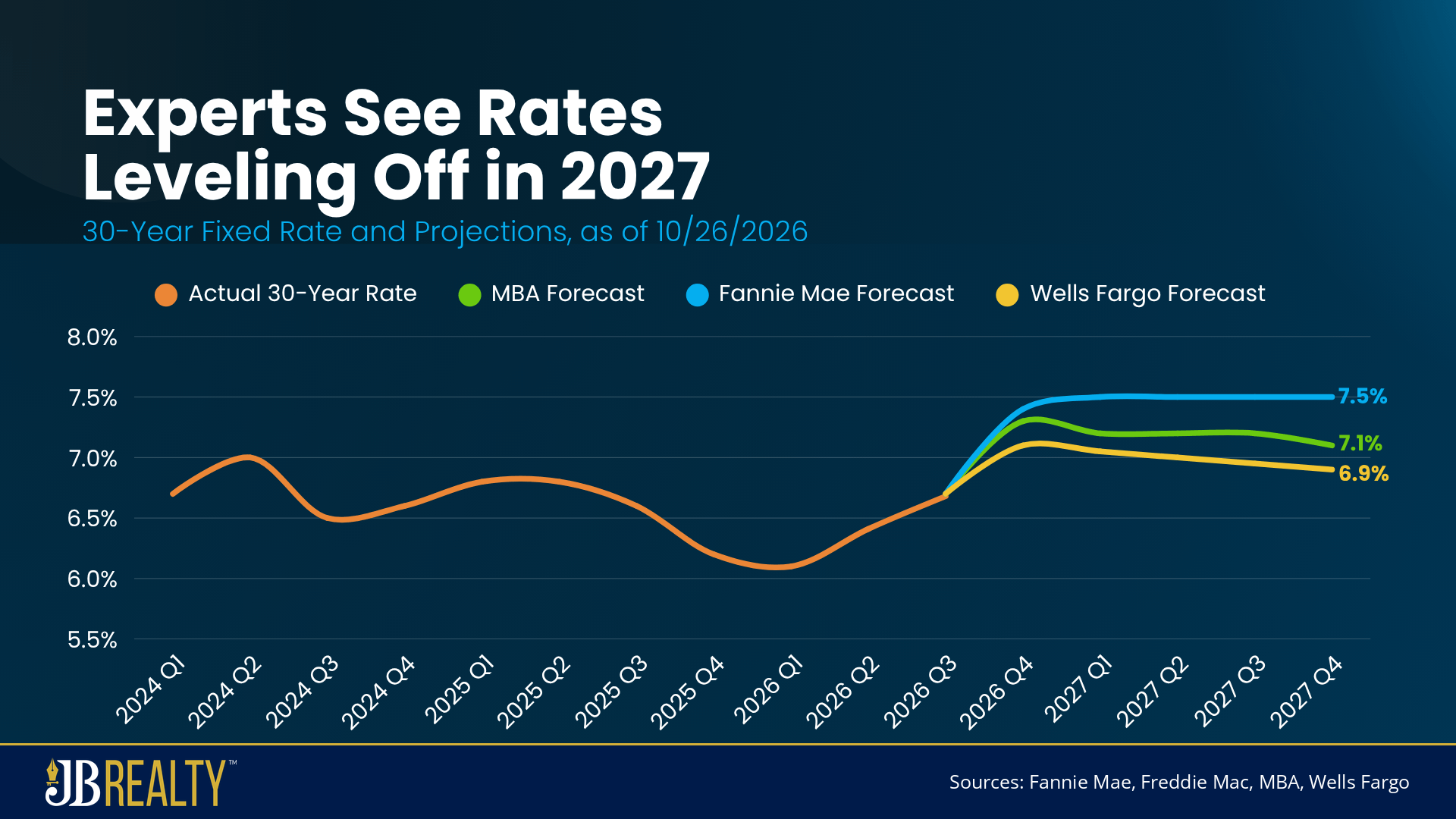
A later revision shows why those dates deserve attention. Fannie Mae’s November 12 housing forecast lowered its projected 2027 average mortgage rate to 7.2%, compared with 7.5% in October. That revision changed the planning outlook without establishing what any buyer would qualify for.
When you are ready to make an offer, replace forecast assumptions with written financing terms for your application. Our guide to comparing mortgage quotes explains how fees, points, loan structure, and timing can change the comparison even when advertised rates look similar.
At HousingWire’s October 1, 2026 Mortgage Banking Summit, a live audience poll asked mortgage executives where rates would be in six months. HousingWire’s report on the survey said 70% selected categories around 7.5% or higher.
The five reported percentages total 103%; HousingWire attributes totals above 100% to rounding. Read the result as directional audience sentiment with that data limitation, rather than a precise probability or a representative measure of every mortgage lender.
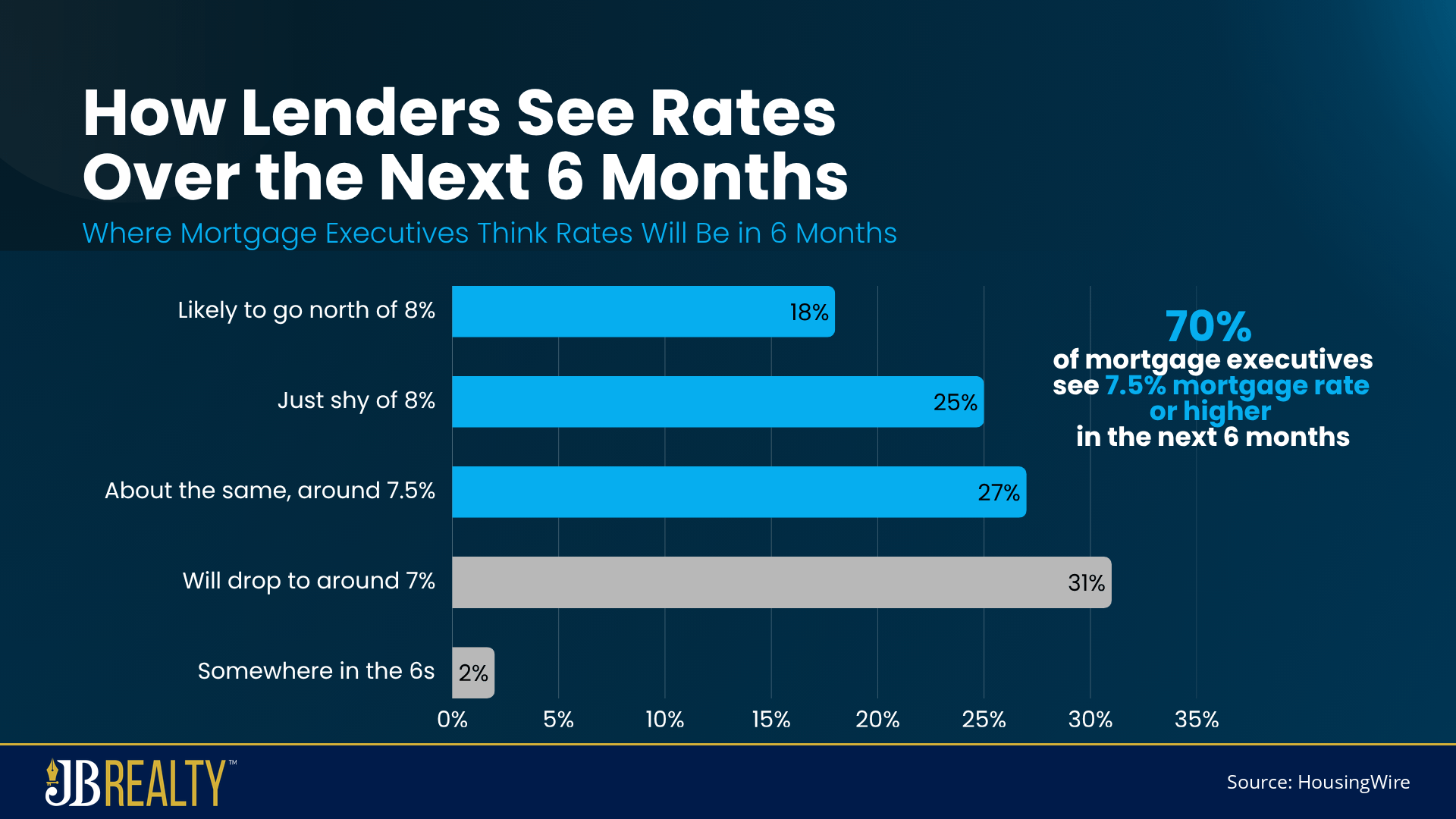
The practical response is to prepare for several outcomes. Neither a room of executives nor a published forecast can tell you when the exact home and financing combination you want will become available.
A lower purchase price does not automatically produce a lower payment if borrowing costs rise. To see the interaction, consider two hypothetical purchases with 20% down and a 30-year fixed mortgage:
The second scenario saves $1,680 on the down payment but costs about $89 more per month in principal and interest. These are illustrative rates and prices, not predictions or available loan offers. The payments exclude taxes, insurance, association charges, and other ownership expenses; closing costs would also need separate estimates.
Ask your lender to run scenarios using the price range and loan options you would actually consider. Compare both the payment and the money left after closing. A smaller down payment requirement, lower monthly payment, and larger cash reserve are different benefits, and one option may not maximize all three.
Establish a maximum comfortable total housing payment, a minimum cash reserve after closing, and the property features you need. Use those limits to evaluate homes as they become available. Avoid stretching the budget because you expect appreciation or a future refinance to solve the problem.
Keep the property assumptions specific. Obtain an insurance quote for each serious candidate and have your lender review the tax estimate and applicable recurring charges. Our article on comparing home insurance quotes explains why a lower premium can come with a different deductible or narrower coverage.
Waiting can be productive when it improves something measurable, such as your available savings or monthly debt obligations. Set a review point and a concrete target so the decision does not depend entirely on the next forecast. If a suitable home fits the limits you already established, evaluate that opportunity on its own terms.
No. A forecast is an expectation based on assumptions that can change. Actual rates and individual loan offers can move differently, so use a range when planning.
Slower positive growth means prices are projected to rise at a lower pace for the stated comparison period. It does not automatically mean a quarter-to-quarter decline. Local homes can still move differently from the national average.
Compare the possible price change with financing costs, cash needs, and your moving plans. A lower price can coexist with a higher payment if rates rise. Waiting makes more sense when it addresses a specific budget or readiness issue.
A future refinance depends on available rates, eligibility, property value, and transaction costs. Treat it as an option to evaluate later. The original purchase should work with financing you can sustain.
No. It reports what participants selected in a live audience poll, not a calculated probability of an economic outcome. The reported percentages also contain the total noted above, so avoid treating the distribution as exact.
We can help you compare homes within your buying limits and review how their prices, condition, and ongoing costs fit the financing scenarios you have discussed with your lender.