Higher mortgage rates can coincide with more room to negotiate, but that does not make every home affordable or every seller flexible. If you’re buying in Palm Harbor, evaluate the specific property’s competition and ask for terms that improve your payment, cash needed at closing, or repair budget. The purchase should work with financing you can obtain now, without depending on a future refinance.
A market headline cannot establish the right offer on a particular house. Start with comparable completed sales, competing listings, condition, and the seller’s asking price. Then investigate the listing’s history and whether it has competing offers.
A long marketing period or previous price reduction can justify questions, but neither proves a seller will accept another discount. A well-priced home may still attract competition. Conversely, a recently listed property may have a seller whose moving schedule makes a suitable closing date valuable.
Ask which terms matter before deciding what to request. We can investigate whether price, timing, repairs, or financing assistance would make the offer more workable. Keep your maximum spending limit separate from the seller’s expectations.
Realtor.com’s October 19, 2026 Market Clock report uses conditions through September. It counts 17 outright buyer’s markets and 49 balanced markets loosening toward buyers, producing the 66 buyer-leaning total. The other 33 comprise 27 seller’s markets and 6 balanced markets tightening toward sellers.
The analysis covers 99 metros because Jackson, Mississippi, was excluded for a transaction-data gap. Its historical comparison identifies 98 outright seller’s markets in spring 2022, not September 2022. The remaining 2 should not automatically be described as outright buyer’s markets.

The report places the Tampa-St. Petersburg-Clearwater metro at 7 o’clock, its late buyer’s-market category. That regional classification provides context for a Palm Harbor search, but it does not describe every neighborhood, price range, or property type. Compare the actual homes available to you before assuming equal bargaining room.
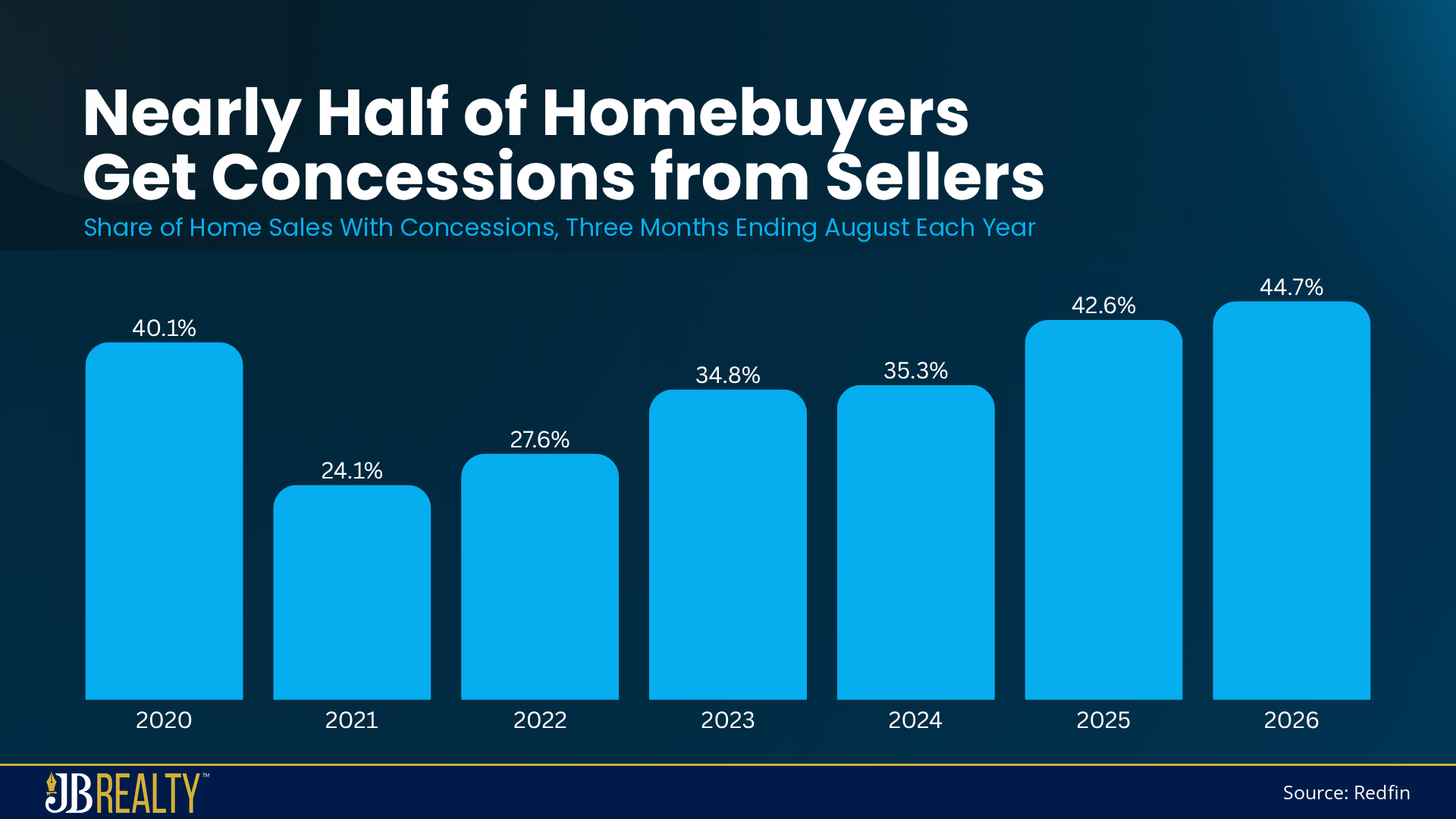
Redfin’s September 18, 2026 seller-concessions analysis reports concessions in 44.7% of transactions in its national buyer-agent sample for the 3 months ending August 31, 2026. The comparable 2025 figure was 42.6%. These are rolling three-month observations, rather than August-only closings or a census of all sales.
The definition includes help with closing costs, repairs, or mortgage-rate buydowns. It excludes reductions to the asking price or a negotiated lower purchase price. The percentage describes how often assistance occurred, not its typical dollar amount or what you should demand.
Rank your requests by their practical effect:
Have the lender confirm permitted uses, contribution limits, and the amount you can actually use. A seller credit is not unrestricted cash. Our comparison of price reductions and rate buydowns explains why the same seller contribution can produce different buyer benefits.
Consider a simplified hypothetical purchase at $400,000 with 20% down. The down payment is $80,000 and the loan is $320,000. A $10,000 price reduction, with the same down payment percentage, would reduce the down payment by $2,000 and the loan by $8,000.
An alternative $10,000 seller credit toward eligible closing expenses could preserve more upfront cash, if the buyer has sufficient eligible costs and the lender permits the full amount. It would not automatically reduce the loan balance or remove the buyer’s down payment requirement. Compare written financing estimates before choosing the structure.
The inspection and appraisal still matter. A credit does not establish the home’s condition, eliminate immediate repair needs, or guarantee that its value supports the contract price. Account for those questions separately before spending your available reserves on a larger offer.
The October 2026 projections from Fannie Mae, the Mortgage Bankers Association, and Wells Fargo illustrate different expectations through 2027. The 7.3% reference is a comparison benchmark, not a live rate quote. Their forecasts cannot determine your financing terms.

The measures also differ: Fannie Mae and MBA use quarterly average mortgage rates, while Wells Fargo uses quarter-end rates. The average column is a simple combination of those projections, not another lender’s offer or a probability-weighted prediction.
Forecasts can change. Fannie Mae’s November 12 update lowered its projected 2027 average to 7.2%, compared with 7.5% in October. Our guide to building a homebuying budget around changing forecasts explains how to test different assumptions without treating them as promises.
Falling rates could attract additional buyers, but inventory, prices, employment, and local demand also influence competition. Waiting does not guarantee that you lose leverage. Buying sooner is useful only when the home, payment, cash needs, and ownership plans fit.
There is no automatic discount. Compare the asking price with recent similar sales and current alternatives, then consider condition and competition. An aggressive offer still needs a reason the seller may accept it.
Yes, but the seller evaluates the combined cost and the rest of the terms. The lender must approve the credit’s use and amount. Decide which request matters most before negotiating.
No. Lower borrowing costs can increase demand, but available inventory and other conditions also matter. Avoid choosing a purchase date solely from a predicted rate change.
Not necessarily. Evaluate the contract price against comparable homes and check financing and appraisal requirements. A useful credit cannot settle an unsupported valuation.
Waiting can help when it lets you strengthen savings, reduce debt, resolve financing questions, or clarify your housing needs. Choose a measurable target and review date. Do not rely on a guaranteed future rate or discount.
Before your next offer, we can review the home and your negotiating priorities, then coordinate with your lender to compare the price, usable credits, and cash you would retain after closing.