Most sellers come into the market with a number already in mind. Sometimes it is based on what a neighbor sold for. Sometimes it is based on what they need to net. Sometimes it is based on how much they love the home and what they believe it should be worth.
The problem is that buyers do not price homes that way. Buyers compare your home against everything else they can buy right now. In a more competitive market, especially across the greater Tampa Bay area, the wrong asking price can quietly cost a seller showings, offers, leverage, and money.
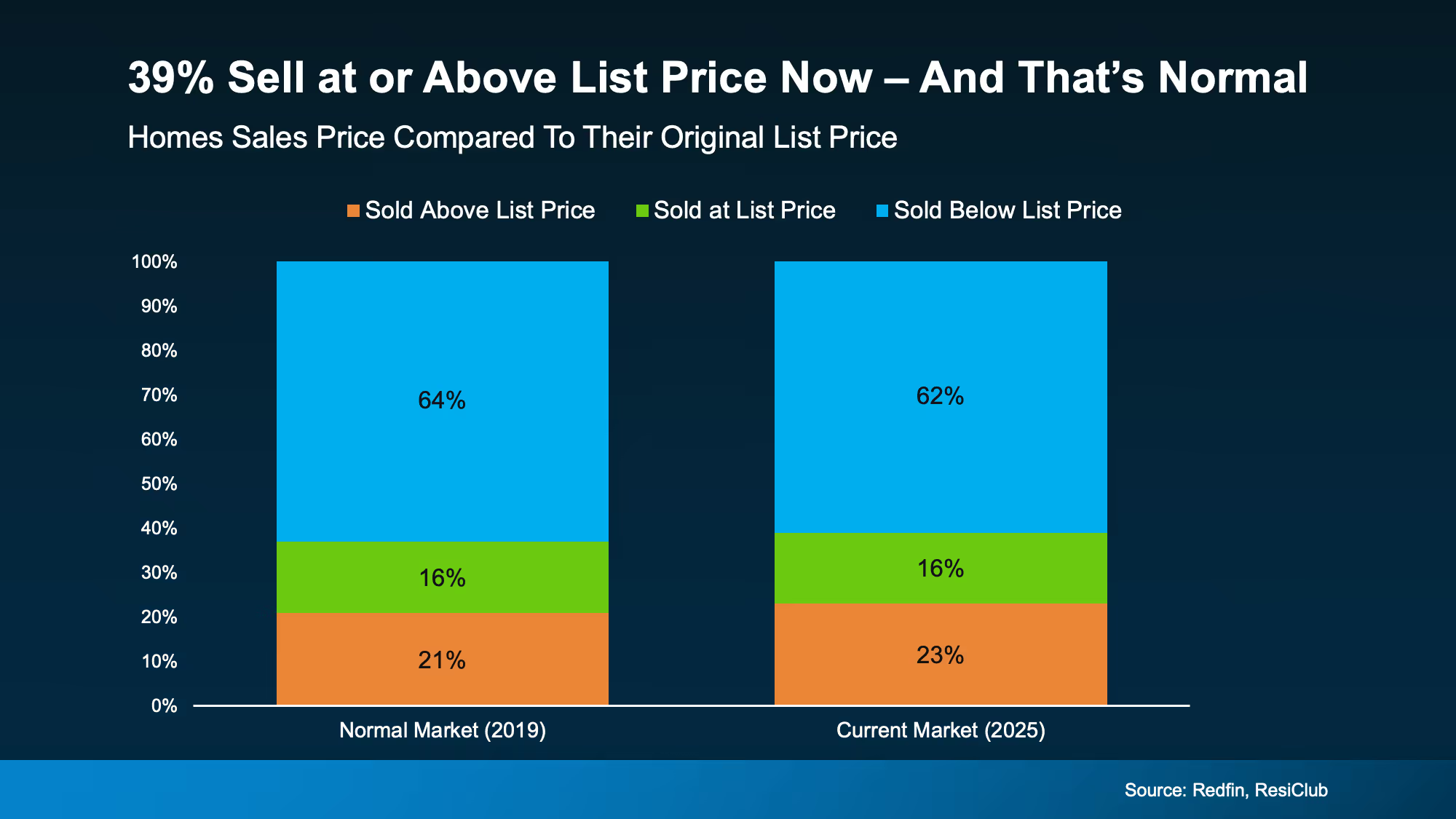
A recent seller survey shows that most homeowners still expect to sell at or above their asking price. That confidence makes sense after the market we saw in 2020, 2021, and part of 2022, when low inventory and intense buyer demand pushed many homes over list price.
But today’s market is different. More homes are available, buyers have more choices, and many are being more careful because higher monthly payments, insurance costs, taxes, and overall affordability are affecting what they are willing to pay.
That does not mean sellers cannot do well. It means the pricing strategy has to match today’s market instead of the market from a few years ago. When sellers price based on old expectations, the listing can miss the strongest buyer attention window right at the start.
For Tampa Bay sellers, this is especially important because buyers are comparing homes across nearby communities. A buyer looking in Riverview may also be watching Brandon, Valrico, Lithia, or Apollo Beach. A buyer in Pinellas may be comparing St. Petersburg, Largo, Clearwater, Seminole, and Palm Harbor. If your home is priced above similar options without a clear reason, buyers may skip it before they ever schedule a showing.
A lot of sellers believe pricing high gives them room to negotiate. On paper, that can sound reasonable. In practice, it often does the opposite.
When a home is priced too high, many buyers do not start with a lower offer. They simply move on to the next property. That is especially true when there are more listings available and buyers feel like they have options.
The first few weeks on the market are usually when a listing gets the most attention. If the price is too high during that window, the home may not get enough showings to create urgency. Without urgency, offers become less likely, and the listing starts to lose momentum.
That is where the problem starts to compound. Less interest can lead to fewer showings. Fewer showings can lead to fewer offers. Fewer offers can lead to more days on market. And once a home has been sitting, buyers often start wondering what is wrong with it, even if the only issue was the original price.

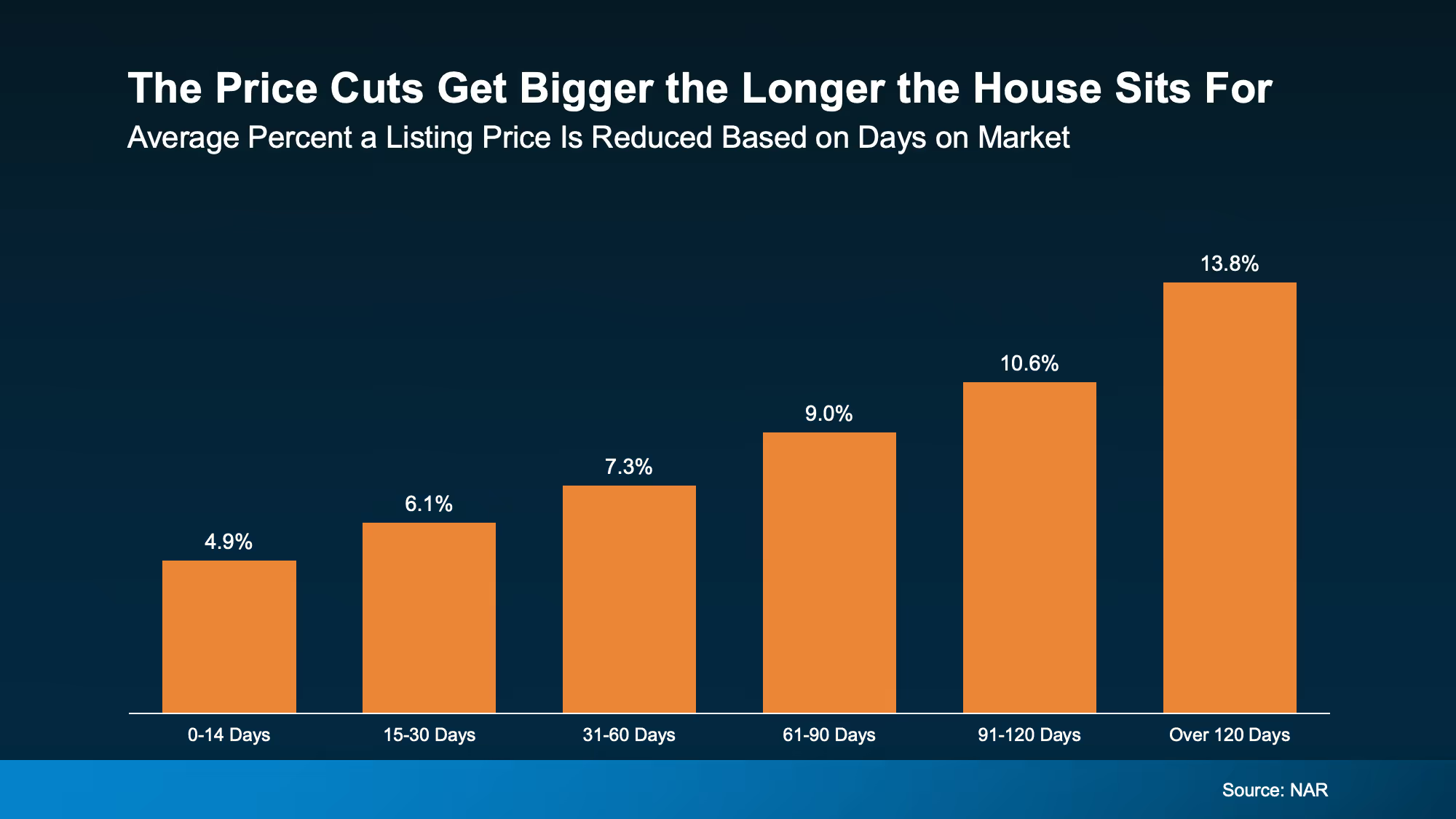
One of the biggest pricing mistakes sellers make is assuming they can just reduce the price later. A price reduction can help, but it does not always reset buyer perception.
When buyers see a home has been on the market for a while and has already had a price cut, some assume the seller may be more negotiable. Others wonder if there is an issue with the house, the condition, the location, or the original pricing. Either way, the seller may have already lost some leverage.
This is why overpricing can be more expensive than it appears. The seller may start high hoping to get more, but after weeks with limited activity, the final result can be a lower sale price, longer carrying costs, more stress, and less negotiating strength.
In today’s Tampa Bay market, this matters even more because buyers are watching price reductions closely. Many buyers are waiting for sellers to adjust, and many agents are advising their clients to focus on homes that appear priced realistically compared to the active competition.
Pricing correctly from the beginning does not mean giving the home away. It means positioning the home where buyers can clearly see the value.
A strong pricing strategy looks at recent comparable sales, but it does not stop there. It also considers active competition, pending listings, current buyer demand, days on market, condition, upgrades, insurance considerations, HOA costs, location, and how similar homes are performing right now.
That last part is critical. Sold comps tell you what buyers were willing to pay in the past. Active listings show you what buyers are choosing from today. If the active competition is stronger, newer, better updated, or priced more aggressively, that affects how your home should be positioned.
The goal is to create demand early. A well-priced home has a better chance of getting more showings, stronger feedback, faster offers, and better negotiating power. When buyers feel like a home is priced fairly, they are more likely to act before someone else does.
The local market is not the same everywhere. Some neighborhoods still move quickly when the home is priced well and presented properly. Other areas have more inventory, more price reductions, and more buyer hesitation.
That is why a broad national headline is not enough to price a home in Hillsborough or Pinellas County. A seller in Westchase may be facing different competition than a seller in FishHawk Ranch. A seller in St. Petersburg may have different buyer demand than a seller in Largo or Clearwater. Even within the same city, pricing can change street by street depending on condition, layout, upgrades, lot, schools, fees, and nearby competition.
The sellers who adjust to the market fastest usually have the advantage. The sellers who price based on what they wish the market would do often end up reacting later, after the best buyer attention has already passed.
Before listing, sellers should look honestly at the home from a buyer’s perspective. That means comparing the home to what buyers can actually purchase today, not just what sold months ago.
A smart pricing review should answer a few key questions. What homes are buyers seeing online next to yours? Which nearby listings are sitting? Which homes went pending quickly? Which listings had to reduce the price? What condition do buyers expect at your price point? What objections could come up during showings or inspections?
Once those answers are clear, pricing becomes less about guessing and more about strategy. The right price should attract attention, support the home’s value, and give the seller the best chance to negotiate from a position of strength.
Many sellers still expect to get their asking price or more, but today’s market requires a more careful pricing strategy. Buyers have more options, and they are paying close attention to value.
Pricing too high can reduce showings, weaken buyer interest, increase days on market, and lead to larger price cuts later. What starts as a plan to leave room for negotiation can become the reason a seller loses leverage.
For Tampa Bay homeowners, the best move is to price based on today’s active competition, current buyer behavior, and neighborhood-level trends. The right price from day one can make the difference between sitting on the market and creating the kind of demand that leads to a stronger sale.