A fixer-upper can cost less overall when its purchase price leaves enough room for repairs, financing expenses, and unexpected work. The lower asking price alone cannot establish that it is a better deal. For a St. Petersburg home search, compare the completed project with suitable alternatives and confirm that the property, financing, and move-in schedule work together.
Separate changes you would like to make from problems you would have to solve. Dated cabinets and worn paint create different decisions from an active leak, damaged framing, or an electrical concern. A home inspection can help identify issues needing further evaluation, while the appropriate specialist should diagnose the repair and estimate its scope.
Ask for written estimates before treating the price difference as available savings. An estimate should identify labor, materials, exclusions, and any assumptions about hidden conditions. A low number based on a quick walkthrough may change once the work is defined.
Compare the home with properties that would be realistic alternatives after the proposed work. A national median cannot tell you what an individual house is worth, and spending a certain amount on improvements does not guarantee an equal increase in value.
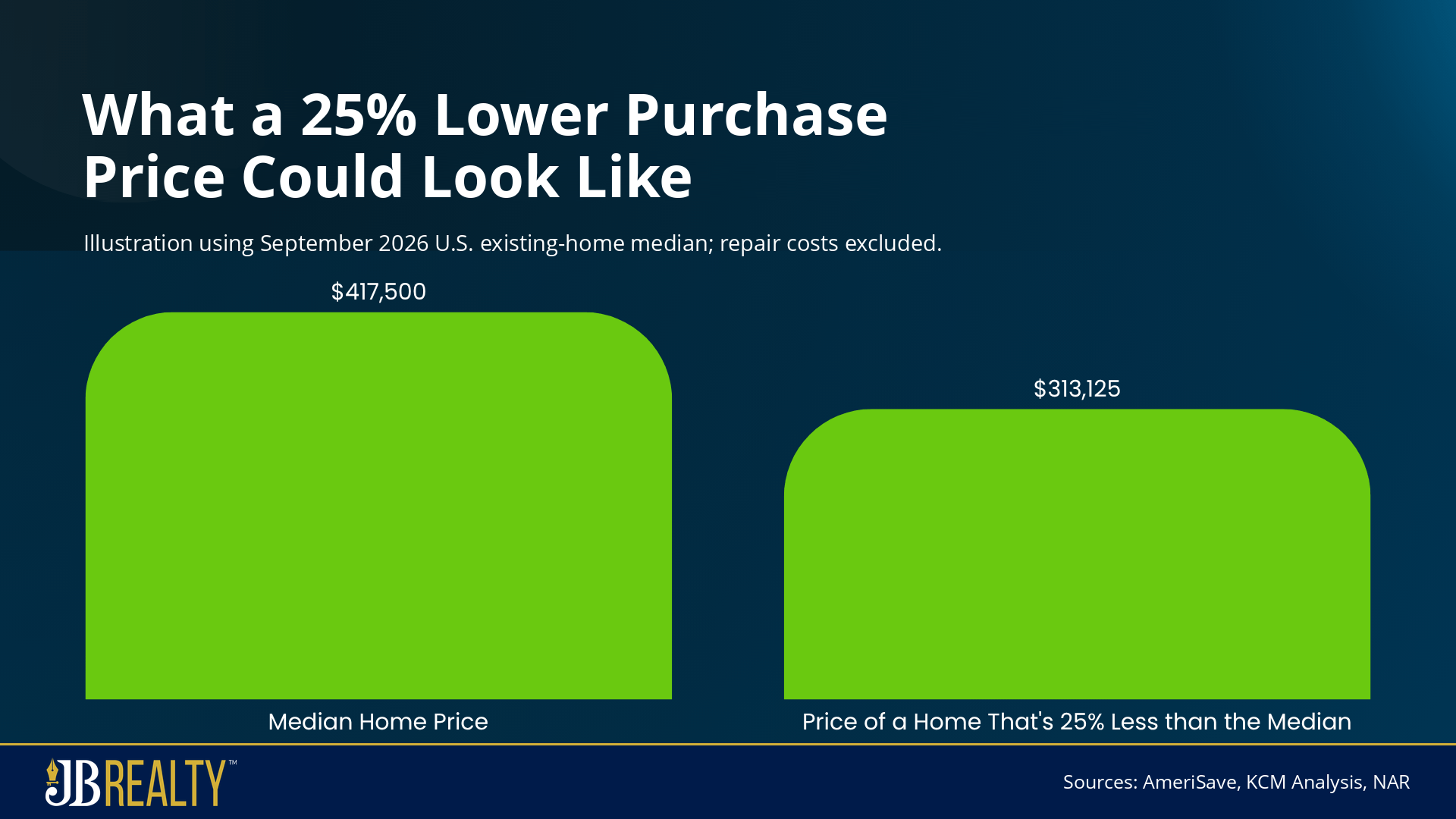
NAR reported a $417,500 national median existing-home sales price for September 2026. Reducing that figure by 25% produces $313,125, a difference of $104,375. This is arithmetic using a national benchmark, not an observed median for fixer-uppers or evidence that a particular property is priced below its market value.
For a hypothetical comparison, add $60,000 of planned work, a $12,000 repair contingency, and $6,000 for temporary housing and project-related costs to a $313,125 purchase. The total becomes $391,125 before closing costs, financing charges, and other ownership expenses.
That leaves a $26,375 difference from the original benchmark, rather than $104,375 of net savings. It still does not establish value because the benchmark represents different homes. Use estimates for the actual property and relevant comparable sales to make the purchase decision.
A standard purchase mortgage and a renovation mortgage can treat property condition differently. Do not assume you can close with an ordinary loan and repair every issue later. Have the lender review the identified problems and proposed work before you rely on that financing plan.
Several mortgage options can combine an eligible purchase and renovation:

Ask how the lender evaluates the completed value, contractor qualifications, required reserves, and the release of repair funds. Payments released in stages as work progresses are commonly called draws. Confirm who requests them, what inspections are needed, and how change orders are approved.
Renovation financing spreads eligible costs into the mortgage; those costs still affect your debt and payment. Compare the total payment, fees, mortgage insurance when applicable, cash required, and savings left afterward. If qualification is uncertain, our explanation of credit scores and mortgage eligibility can help frame the initial lender conversation.
For a property within St. Petersburg’s municipal boundaries, use the city’s building and permitting resources to investigate permit history and discuss the proposed scope. Confirm the status of relevant permits and inspections rather than assuming that a renovated appearance establishes completed approvals.
A smaller project budget does not automatically make every task exempt from permitting. Requirements depend on the work and property. Before pricing an addition, layout change, or repair to damaged building components, ask the contractor and building department what approvals would be necessary.
Also request insurance quotes based on the home’s current condition and intended renovation. Ask whether the insurer requires repairs, inspections, or different coverage while work is underway. Resolve those questions with the insurance professional and lender before relying on a completed-home premium estimate.
Build a schedule around a usable home, contractor availability, materials, approvals, and the lender’s deadlines. Optional finishes may wait when the home is suitable for occupancy and financing permits it. Required repairs and lender-controlled renovation work need a defined completion plan.
If you cannot occupy the property during construction, include housing overlap, storage, and another move in the comparison. Decide who will monitor progress, approve changes, and respond when a contractor uncovers additional work. Financing approval does not remove those responsibilities.
Before committing, identify what would make you reduce the offer, request a different repair arrangement, or stop pursuing the property under your contract’s terms. We can help connect inspection findings, estimates, and financing feedback with the negotiation. Avoid relying on future appreciation or a later refinance to make an otherwise unaffordable project work.
They may have a lower purchase price, but repairs and project costs can narrow or eliminate the difference. Compare suitable homes using the expected total cost. A lower asking price does not prove a below-market purchase.
Eligible renovation mortgages can do that, subject to borrower, property, project, and lender requirements. Obtain a lender review of the actual plan. Do not assume every mortgage provider offers each program.
Ask the lender before building the budget around unpaid labor. Program rules, contractor requirements, permits, and the type of work can limit that approach. Confirm what is allowed and how the work must be documented.
Some optional updates may wait. Work required for financing, insurance, occupancy, or an approved renovation agreement may follow a different timetable. Establish those distinctions before closing.
Base the reserve on the inspection findings, estimate exclusions, project complexity, and lender requirements. The hypothetical contingency above is an example, not a universal recommendation. Keep a separate household emergency reserve in the decision.
Send us the fixer-upper and a move-in-ready alternative you are considering, and we can help compare the purchase options while you obtain repair estimates and lender feedback.