Fall can be a good time to buy a home in Tampa Bay when you find a property that fits your budget and a seller willing to negotiate. Seasonal trends can improve your options, but your decision should rest on a workable home, payment, and timeline.
For a search in Hillsborough County, including Riverview, Brandon, or Valrico, evaluate the homes available in your price range. A national seasonal pattern provides background; the terms of your purchase depend on the property and its competition.
Ask your lender to update your buying range using current loan quotes. Include property taxes, insurance, homeowners association dues, and any Community Development District assessments in your monthly budget. Keep funds available for inspections, moving, and repairs after closing.
Work backward from your lease expiration or desired move date. Allow time for your search, financing, inspections, and any overlapping housing costs. Set a payment ceiling you can sustain with the financing offered, so a possible future refinance is an option rather than something the purchase depends on.
Property type matters when judging your options. In its July 2026 Florida housing report, Florida Realtors reported 4.5 months of supply for existing single-family homes and 7.8 months for condo-townhouse properties. Months of supply estimates how long available inventory would last at the recent sales pace.
Those statewide figures illustrate why a condo search and a detached-home search may feel different. Narrow the comparison further using the neighborhood, price range, condition, and ongoing ownership costs. Our Tampa Bay market information can help you explore local trends before reviewing individual properties.
Historical national seasonal averages place fall inventory above winter and spring, with only a small difference between fall and summer. That pattern makes fall a useful time to refresh a search that previously offered too few suitable homes.
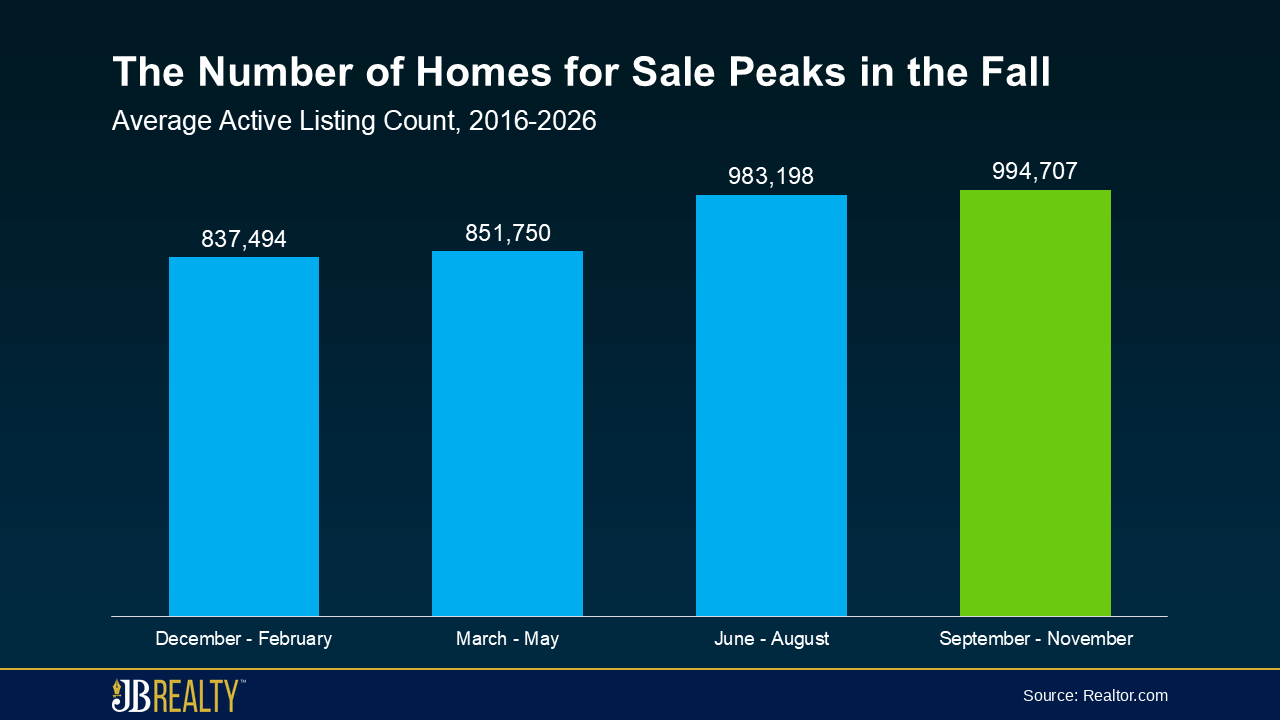
Build a short list of homes you would actually consider buying. Compare recent listings with homes that have been available longer, and note which alternatives offer a better combination of condition, location, and cost. Additional inventory is most useful when it gives you realistic alternatives.
Start with the current asking price, recent comparable sales, and competing listings. Review the original listing date and subsequent price changes. A reduction can improve the opportunity, but a home that started too high may still need a closer pricing review.
The historical HousingWire comparison places fall median asking prices below spring and summer levels. A median reflects the mix of homes being offered for sale. It does not show that every individual home loses value when the season changes.

Price-cut frequency provides another perspective. In the historical seasonal comparison, 16.9% of fall listings had a reduction, compared with 16.8% in summer. These percentages describe how many listings were reduced, not the size of the discounts.

The small summer-to-fall difference is a reason to assess the seller’s situation individually. Ask about the preferred closing schedule and use comparable sales, competing homes, and inspection findings to support requested terms. Our explanation of negotiating on price-reduced homes covers how to turn that information into an offer.
Decide whether your main constraint is the purchase price, cash needed at closing, or necessary repairs. A seller credit toward eligible closing costs may address a cash shortage, while a lower price may reduce the amount you borrow. Confirm allowable credits and eligible expenses with your lender before negotiating.
For illustration, consider a $420,000 purchase with 10% down. A $10,000 price reduction lowers the down payment by $1,000 and the base loan by $9,000. A $10,000 closing-cost credit at the original price could instead cover up to $10,000 of eligible expenses, if the loan rules and actual costs allow it.
A suitable closing date can also be part of the discussion. Offer timing that works for both parties while keeping enough time for financing and due diligence. At JB Realty, we help buyers connect their offer terms to the property’s value and their practical needs.
Fall overlaps the Atlantic hurricane season, which runs through November 30. Request property-specific insurance quotes early and ask a licensed insurance professional when coverage can be bound, meaning confirmed for the agreed effective date. An approaching storm can affect insurers’ ability to issue coverage and disrupt closing schedules.
Review official FEMA flood information, seller disclosures, and inspection findings for the property. Confirm the expected premiums and deductibles, and obtain a property-tax estimate using the county property appraiser’s resources. Verify HOA dues and any CDD assessments so your payment estimate includes each expense once.
Discuss storm-related delays, possible property damage, and any need for another inspection with your agent and lender. Contract rights depend on the agreement and circumstances, so obtain advice from a Florida real estate attorney when legal interpretation is needed. Keep your moving arrangements flexible enough to accommodate a delay.
There is no single month that guarantees the best purchase. Fall can offer useful opportunities, but local competition, available homes, financing, and your moving deadline matter more than a calendar ranking.
Yes, you can request additional changes to price or terms. Support your offer with comparable sales, competing properties, and the home’s condition. A previous reduction does not tell you what the seller will accept.
Base the decision on financing available to you and a payment you can sustain. Waiting may help if you need to improve your finances, but future rates and home prices are uncertain. Treat refinancing as a possible future option with its own costs and qualification requirements.
No. A price reduction changes the purchase price, while a closing-cost credit helps pay eligible transaction expenses. Ask your lender to compare their effects on your down payment, loan amount, and total cash needed at closing.
Yes, storms can disrupt insurance, inspections, financing, or other services needed to close. Arrange coverage early and discuss a backup moving plan. Any extension or other contractual remedy depends on your agreement and the circumstances.
Ask JB Realty to review the homes in your price range and help you evaluate a fall purchase through our Tampa Bay buyer representation, with an offer strategy and closing timeline built around your needs.