For many first-time buyers, affordability is one of the biggest obstacles to homeownership. Higher prices, mortgage payments, insurance costs, taxes, & everyday expenses can make buying a home feel out of reach, especially for buyers trying to qualify on one income.
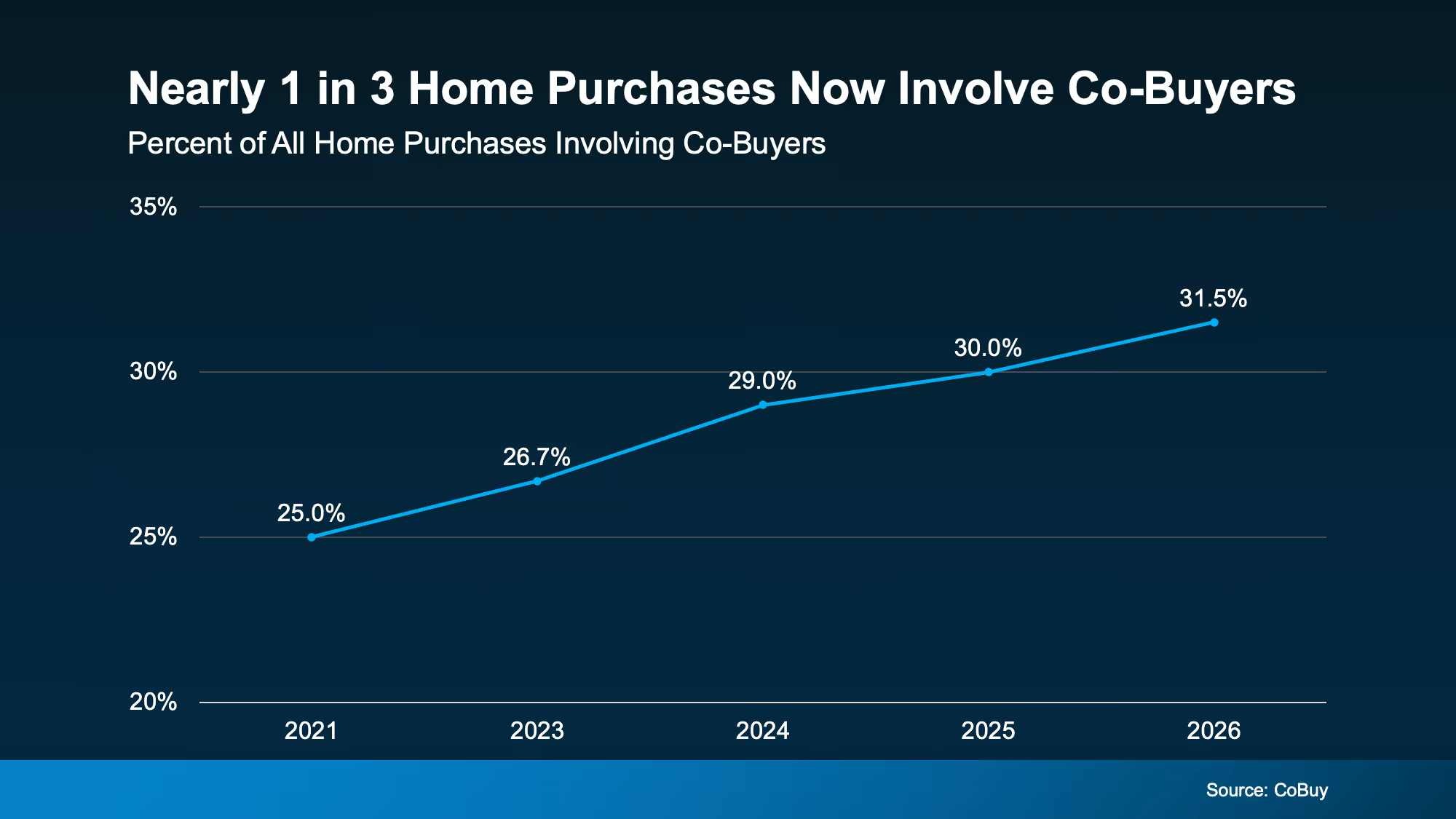
Because of that, some buyers are looking at co-buying as a possible solution. Co-buying means purchasing a home with another person, such as a family member, sibling, parent, adult child, or another trusted person. While this can help some buyers share costs & increase purchasing power, it also comes with serious responsibilities that should not be taken lightly.
The desire to own a home is still strong for many younger buyers, but the math has become harder. According to the article, 73% of Gen Z & millennial buyers say affordability is the reason they have not made homeownership a priority, while first-time buyers now make up just 21% of all home purchases.
In the greater Tampa Bay area, buyers are often trying to balance home prices, mortgage rates, insurance costs, HOA fees, commute times, & long-term financial stability. In markets across Hillsborough & Pinellas, that pressure can make creative buying options feel appealing.
But creative does not always mean wise. Just because co-buying can help someone qualify for a home does not automatically mean it is the right decision.
Co-buying means two or more people are financially tied to the same property. That usually means shared responsibility for the mortgage, taxes, insurance, maintenance, repairs, & any unexpected costs that come with owning a home.
On paper, that may sound simple. In real life, it can become complicated quickly if the buyers do not have the same financial habits, long-term plans, expectations, or level of commitment.
This is especially important for buyers who are not married. From a Christian perspective, buyers should be careful not to use co-buying as a way to normalize living together before marriage or place themselves in a situation that creates spiritual, relational, or practical compromise. A home purchase is already a major commitment, and it should not be used to blur lines that need to remain clear.
One of the biggest dangers with co-buying is assuming everyone will feel the same way later that they feel today. Life changes, relationships change, jobs change, finances change, & priorities change.
What happens if one person suddenly cannot afford their share of the payment? What happens if someone loses a job, gets sick, takes on more debt, or simply stops contributing consistently? The lender does not usually care who was “supposed” to pay. If all borrowers are on the loan, the missed payment can affect everyone.
There is also the issue of timing. One person may want to sell in two years, while the other wants to stay for 10. One person may want to refinance, rent out the home, renovate, move family in, or buy another property, while the other person disagrees.
Disagreements between co-owners can become more than awkward. They can become financially damaging.
If the owners cannot agree on whether to sell, who pays for repairs, how improvements are handled, or what happens when someone moves out, the situation can become stressful very quickly. In some cases, unresolved disputes may require legal help, forced sale discussions, or court involvement.
That is why buyers should not only ask, “Can we afford this together?” They should also ask, “What happens if this becomes difficult?” A wise plan considers not only the best-case scenario, but also the situations no one wants to imagine.
If someone is considering co-buying, a written co-ownership agreement should be treated as essential, not optional. This agreement should clearly explain how ownership is divided, how costs are split, who lives in the property, how repairs are approved, what happens if someone cannot pay, & what happens if someone wants out.
It should also address whether an owner can force a sale, how the property value will be determined, whether a buyout is allowed, how deadlines will work, & what happens if a disagreement cannot be resolved.
This is not about expecting the worst from people. It is about being responsible, honest, & clear before money, property, credit, & relationships are all tied together.
Some buyers may assume co-buying with family is safer than buying with a friend or unmarried partner. In some cases, it may be. Parents, siblings, or adult children may have shared trust, a longer relationship history, & more stable expectations.
But family arrangements still need clear boundaries. Money can strain even strong relationships when expectations are vague. A parent helping an adult child, siblings buying together, or relatives purchasing a shared property should still put the agreement in writing and make sure every person understands the financial risks.
Good intentions are not enough to protect a relationship when a mortgage payment is late, a repair bill is large, or someone wants to sell sooner than expected.
Co-buying may not be wise if the buyers are already financially stretched, have unstable income, disagree on long-term plans, or are relying on the arrangement just to barely qualify. If the home only works when everything goes perfectly, that should be a warning sign.
It may also be unwise if the arrangement creates unclear living boundaries, relational pressure, or compromise. The goal of buying a home should not only be to get approved. It should be to make a responsible decision that supports financial stability, personal integrity, & healthy relationships.
Sometimes the better choice is to wait, save more, reduce debt, buy a smaller property, look in a different area, or revisit the plan later.
Co-buying can help some buyers enter the market sooner, but it is not a simple shortcut. It ties people together financially, legally, & practically in ways that can become difficult if life changes or disagreements arise.
For buyers considering this path, the decision should be approached with caution, wisdom, clear boundaries, & written agreements. The most important question is not just whether co-buying can help someone buy a home today. It is whether the arrangement is wise, stable, & protected enough to hold up when real life gets complicated.