Before selling, start with known condition concerns and the improvements that help your home compare with current alternatives. Set a spending limit and realistic completion schedule before hiring anyone. For an Apollo Beach homeowner planning a 2027 sale, early preparation can create time for decisions without committing you to a full renovation.
Walk through the home with your likely buyers and competing properties in mind. A repair that addresses an active problem serves a different purpose from replacing a functioning finish you simply dislike. Separate those decisions before combining them into one renovation budget.
Sort the proposed work into 3 groups:
The order matters. Painting a stained ceiling before investigating the source of the stain can mean paying for the same finish work twice. Similarly, installing new flooring before a repair that requires opening the floor can create avoidable expense.
We can help compare your home’s current condition with the alternatives buyers would actually consider. That review should guide the scope, rather than a general assumption that every room needs updating.
Zillow’s October 14 2026 seller research found that 78% of sellers reported completing at least one improvement project as part of selling. Interior painting was the most common, reported by 36%.
These are national reports of completed work, not proof of a project’s resale return. Sellers could report several improvements, so the percentages are not parts of one total.
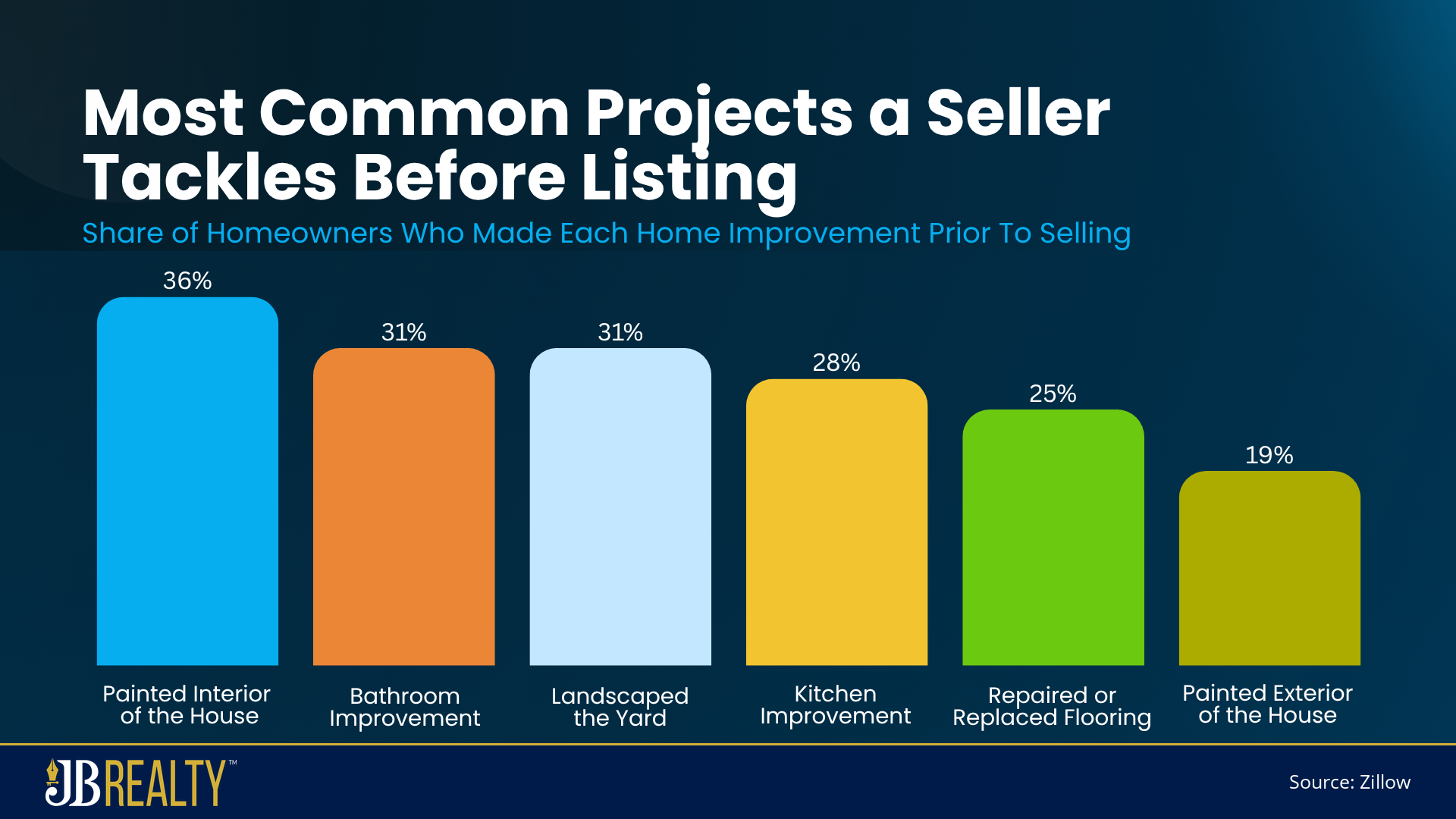
Use the list to ask useful questions. Does the existing paint need attention, or would cleaning and a few touch-ups be sufficient? Is the bathroom functioning well with dated finishes, or is there a condition problem to resolve? An improvement category can include very different scopes of work.
Set a preparation budget that leaves money available for selling expenses, your move, and a reserve. Then get written estimates for the work you are seriously considering. Compare the same scope and materials so a lower quote does not merely omit part of the job.
Consider a hypothetical $8,000 preparation budget. If an identified repair costs $5,500 and painting and cleaning total $1,500, that leaves $1,000 for unexpected items. Adding an optional bathroom update would require reducing another item or increasing the budget; the original limit would not remain intact simply because the new project seems appealing.
Ask what the spending is expected to accomplish. Resolving a documented problem, improving presentation, and seeking a higher asking price are different goals. None guarantees that you will recover every dollar when the home sells.
For a larger project, include the cost of delay as well as the contractor’s price. Extra ownership expenses, disruption, and the possibility of missing your intended listing window belong in the comparison. Leave room to choose a smaller scope when the larger one does not support the overall move.
A pre-listing inspection can be useful when you want a broader condition review before deciding on repairs. It is an option to discuss based on the home and your goals. A known system problem may also call for a qualified specialist rather than waiting for a general inspection to confirm it needs attention.
Ask what the inspection includes, which areas are excluded, and whether any additional evaluation is recommended. Pricing depends on the property and scope, so request a local quote. A seller’s inspection does not replace the buyer’s own review or guarantee that new questions will not arise.
For a property in unincorporated Hillsborough County, the county’s homeowner permitting guidance distinguishes typical cosmetic work from projects that may need permits. Painting and floor coverings are generally listed as exempt, while a bathroom remodel involving plumbing may require a permit. Confirm the actual scope before work begins.
Clarify who will obtain required approvals and arrange inspections. Where licensing is required, verify that the contractor’s license covers the proposed work, and check insurance. Keep the written scope, payment schedule, invoices, warranties, and relevant permit records together.
Our guide to preparing for buyer review and closing explains why condition information and repair documentation remain useful after an offer is accepted.
Choose a target photography date, then work backward through the tasks needed to reach it. For example, an investigation may need to come before a repair quote, the repair before drywall finishing, and the finishing before paint and cleaning. A collection of contractor start dates is not the same as a completion plan.
Before booking, confirm material availability, access, estimated duration, cleanup responsibilities, and what happens if the schedule changes. Leave time to review completed work and address unfinished details. Avoid committing your entire schedule to the earliest possible completion estimate.
Decluttering and organizing records can begin while you obtain quotes. Save the final deep clean, styling, yard touch-ups, and small paint corrections for after disruptive work is finished. Keep the home’s presentation consistent with the photos when showings begin.
Reassess the pricing and listing plan near launch. Completing the work does not freeze the market conditions that existed when you started. Current competition still needs a final review.
Work backward from the desired listing date using the actual project list. Allow time for estimates, contractor availability, any approvals, and a buffer for unfinished work. A simple refresh and a project involving repairs or permits need different schedules.
An inspection may help identify concerns worth evaluating before you commit the budget. Discuss its likely value and scope first, especially when some problems are already known. Use qualified specialists where further diagnosis is needed.
Compare the kitchen’s condition with relevant competing homes and obtain a clear cost and timeline. A working kitchen with dated finishes may call for a different response from one with damage or malfunctioning components. A full remodel is not an automatic requirement.
No. They show how often surveyed sellers reported particular work. They do not establish a return on investment or how buyers will value an improvement in your home.
Aim for a home that is clean, accessible, and visually finished, with disruptive work and cleanup completed. Review remaining details before confirming the appointment. Photos should accurately reflect the condition buyers will see during showings.
Before you book contractors, we can review your preparation priorities with you and connect the proposed work, budget, and completion dates to a realistic listing plan.