For many families, buying a home is not just about the price of the house. It is also about childcare, insurance, taxes, utilities, groceries, savings, and everything else that has to fit into the monthly budget.
That is why some buyers feel stuck before they even start. They may have stable income and a real desire to buy, but once they add up the cost of housing & childcare together, the numbers feel tight.
In the greater Tampa Bay area, this can be especially challenging because buyers are balancing home prices, mortgage rates, property taxes, insurance, HOA fees, and commuting needs across Hillsborough & Pinellas counties. For families with young children, the cost of childcare can make affordability feel even more difficult.
Childcare can take a major bite out of a household budget. National guidance often points to 7% of income as a reasonable affordability benchmark, but many families spend closer to 10% or more.

When that expense is added to a mortgage payment, it is easy to see why some families start looking for a different path. Instead of trying to buy alone, they consider whether living with parents, grandparents, or other relatives could make the move more realistic.
This does not mean every family wants the same setup. Some need help with childcare. Others want to care for aging parents. Some want to share expenses. Others simply want more connection & support under one roof.
A multigenerational home is a home designed or used for multiple generations living together. That could mean adult children, parents, grandparents, or extended family sharing the same property.
In Tampa Bay, buyers may search for homes with in-law suites, mother-in-law suites, guest suites, split-bedroom layouts, casitas, converted garages, bonus rooms, or separate living areas. The right setup depends on privacy needs, mobility, parking, bathrooms, kitchen access, and how each family plans to use the space.
Some homes offer a full separate suite with its own entrance. Others simply have a flexible layout that gives family members enough room to live together comfortably while still maintaining some independence.
For buyers in Tampa, Riverview, Brandon, St. Petersburg, Clearwater, Largo, Westchase, FishHawk, and surrounding areas, these features can be valuable because they serve more than one purpose. A separate living space can help with childcare today, aging parents later, or long-term flexibility as family needs change.
Multigenerational living is becoming more common because it helps solve several problems at once. It can make housing more affordable, provide built-in family support, and help families share responsibilities.
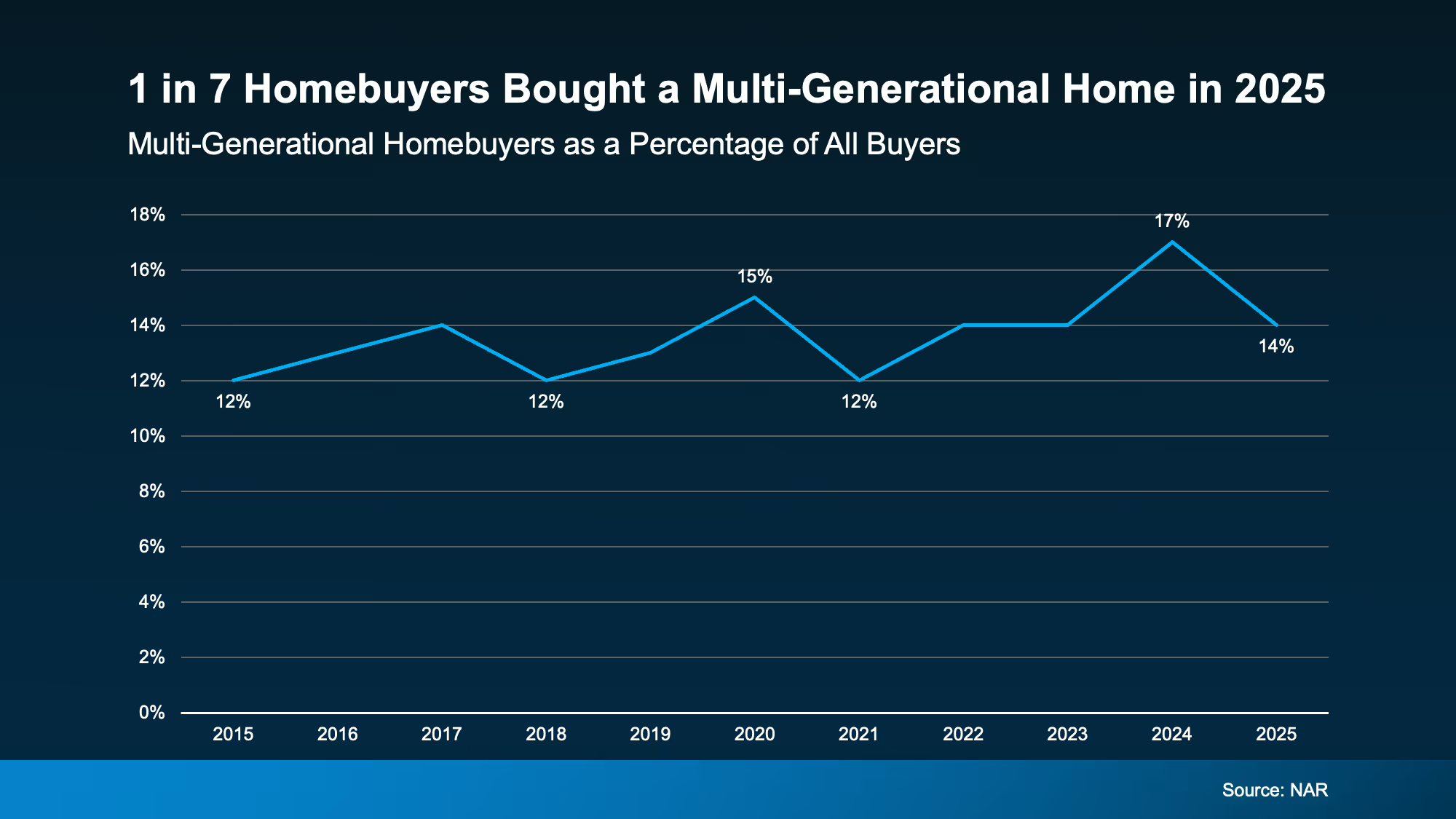
National buyer data shows that a meaningful share of buyers are choosing multigenerational homes. The reasons vary, but affordability, caregiving, grandchildren living in the home, and reducing childcare costs are all part of the conversation.
That matters because this is not just a lifestyle preference anymore. For some families, buying together may be the strategy that makes homeownership possible.
Pooling resources can also change the search. A family that could not afford the right home separately may be able to consider a larger home together, as long as the financing, ownership structure, and household expectations are clearly discussed upfront.
One of the biggest benefits is shared financial responsibility. Multiple adults may be able to contribute toward the down payment, closing costs, monthly mortgage payment, utilities, maintenance, or household expenses.
Another benefit is childcare support. When grandparents or other trusted relatives live in the home, they may be able to help with school pickups, sick days, after-school care, or day-to-day routines. That can reduce stress and may lower childcare expenses.
There can also be emotional benefits. Families may enjoy more time together, stronger support systems, and greater flexibility when life gets busy.
But the home has to work practically. A good multigenerational setup should consider privacy, noise, parking, bathrooms, storage, accessibility, and how shared spaces will be used.
Buying a home with family can be a smart move, but it needs clear planning. Before moving forward, everyone should understand who will be on the loan, who will be on title, who will contribute financially, and how repairs or future decisions will be handled.
It is also important to talk through lifestyle expectations. Shared living can work well when everyone is honest about privacy, chores, childcare help, guests, pets, quiet hours, and long-term plans.
The property itself also matters. Buyers should confirm whether additions, converted spaces, detached living areas, or rental-style setups comply with local rules, zoning, permitting, and HOA restrictions when applicable.
The goal is to find a home that supports the family structure without creating new stress. A larger home is not automatically the right home if the layout does not give everyone the function & privacy they need.
When buying a home feels out of reach, multigenerational living may be one way to make the numbers work. By combining resources and sharing responsibilities, some families can create a path to homeownership that would be harder to achieve alone.
This option can be especially helpful for buyers managing both housing costs & childcare costs. It may also provide flexibility for families who want to support aging parents or stay closer to loved ones.
The key is choosing the right home, asking the right questions, and making sure the arrangement works financially, legally, and practically. Sometimes the best path to homeownership is not doing it alone. It is doing it together.