
A kitchen update, bathroom refresh, or outdoor living improvement can feel expensive, especially when home prices, labor costs, & materials have all gone up.
But many long-time homeowners in the greater Tampa Bay area may already have a resource they are not thinking about: home equity.
Home equity is the difference between what your home is worth today & what you still owe on the mortgage. For homeowners who bought years ago in places like Tampa, Riverview, Brandon, Westchase, St. Petersburg, Clearwater, Largo, Seminole, or other parts of Hillsborough & Pinellas counties, that equity may be significant.
Nationally, homeowners are expected to spend more than $522 billion on home improvements by the end of 2026. Many are not paying for those projects only from savings. They are using equity they have built over time.
That does not automatically mean you should borrow against your home. It means you should understand your options before assuming a project is out of reach.
Equity can sometimes be used through options like a home equity loan, HELOC, or cash-out refinance. Each option works differently, so the right answer depends on your mortgage balance, interest rate, timeline, credit profile, income, & risk tolerance.
According to recent national equity data, the average homeowner has about $313,000 in equity. That is not a recommendation to spend it. It is a reminder that many homeowners have more financial flexibility than they realize.
For sellers, that flexibility can matter. A smart improvement may help a home show better, photograph better, compete more effectively, & reduce buyer objections during showings or inspections.
For homeowners staying put, equity may help fund improvements that make the home more functional now while also protecting future resale value.
Research on equity-based borrowing shows that home improvements are one of the most common reasons homeowners tap into equity.
Top motivations include:
• Funding home improvements at 45%
• Paying down other debts or debt consolidation at 16%
• Investing in other properties at 16%
That makes sense. A home is usually one of the largest assets a person owns, so reinvesting into that asset can be a practical move when done carefully.
But this is where sellers need to be selective. Just because you can use equity does not mean every renovation is worth doing.
This is especially important in Tampa Bay real estate because buyers are not all looking for the same thing.
A buyer in a waterfront Pinellas neighborhood may care more about flood elevation, windows, insurance considerations, & outdoor living. A buyer in a Hillsborough County suburb may care more about roof age, HVAC, layout, schools, commute routes, & overall move-in readiness.
Some projects help a home sell better. Others may cost more than they return.
Before spending money, ask 3 questions:
• Will this solve a real buyer concern?
• Will this help the home compete with similar active listings?
• Will this improvement likely support the sale price, marketability, or buyer confidence?
If the answer is unclear, it may be better to hold off or choose a smaller, more targeted update.
One of the biggest mistakes sellers make is assuming a major remodel is always the best path.
Sometimes it is. A dated kitchen, worn flooring, or tired bathroom can hurt a listing if nearby homes are more updated. But in other cases, a full renovation may not be necessary.
Smaller improvements can still make a strong difference, including fresh interior paint, modern lighting, updated cabinet hardware, improved landscaping, cleaner grout, pressure washing, minor drywall repair, & better staging.
In Florida, buyers also pay close attention to big-ticket items. A beautiful kitchen helps, but a home with an older roof, aging AC, or visible moisture concerns may still face hesitation because buyers are thinking about insurance, maintenance, & long-term cost.
That is why the best renovation plan is not always the flashiest one. It is the one that removes friction for the buyer.
For Tampa Bay sellers, these are some of the updates worth evaluating before listing:
Kitchen updates can be valuable when the current kitchen feels dated, dark, or disconnected from the rest of the home. This does not always mean a full gut remodel. Counters, cabinet refreshes, lighting, appliances, backsplash, sink fixtures, & hardware may be enough depending on the home.
Bathroom improvements can help when the space feels worn, poorly maintained, or outdated. Buyers tend to notice vanities, lighting, tile, shower glass, fixtures, mirrors, & general cleanliness.
Flooring matters because it affects the whole feel of the home. Consistent flooring, clean transitions, & durable surfaces can help a property feel more move-in ready.
Curb appeal is important because buyers make quick judgments before they ever step inside. Landscaping, mulch, exterior cleaning, front door condition, walkway appearance, & entry lighting can all influence first impressions.
Outdoor living can be a major advantage in Florida. Screened lanais, covered patios, usable backyard space, pavers, lighting, fencing, & clean pool areas can help buyers picture how they will actually live in the home.
Major systems may not be glamorous, but they can be deal-makers or deal-breakers. Roof, AC, water heater, electrical, plumbing, windows, & drainage concerns all matter, especially when buyers are comparing insurance costs & future maintenance.
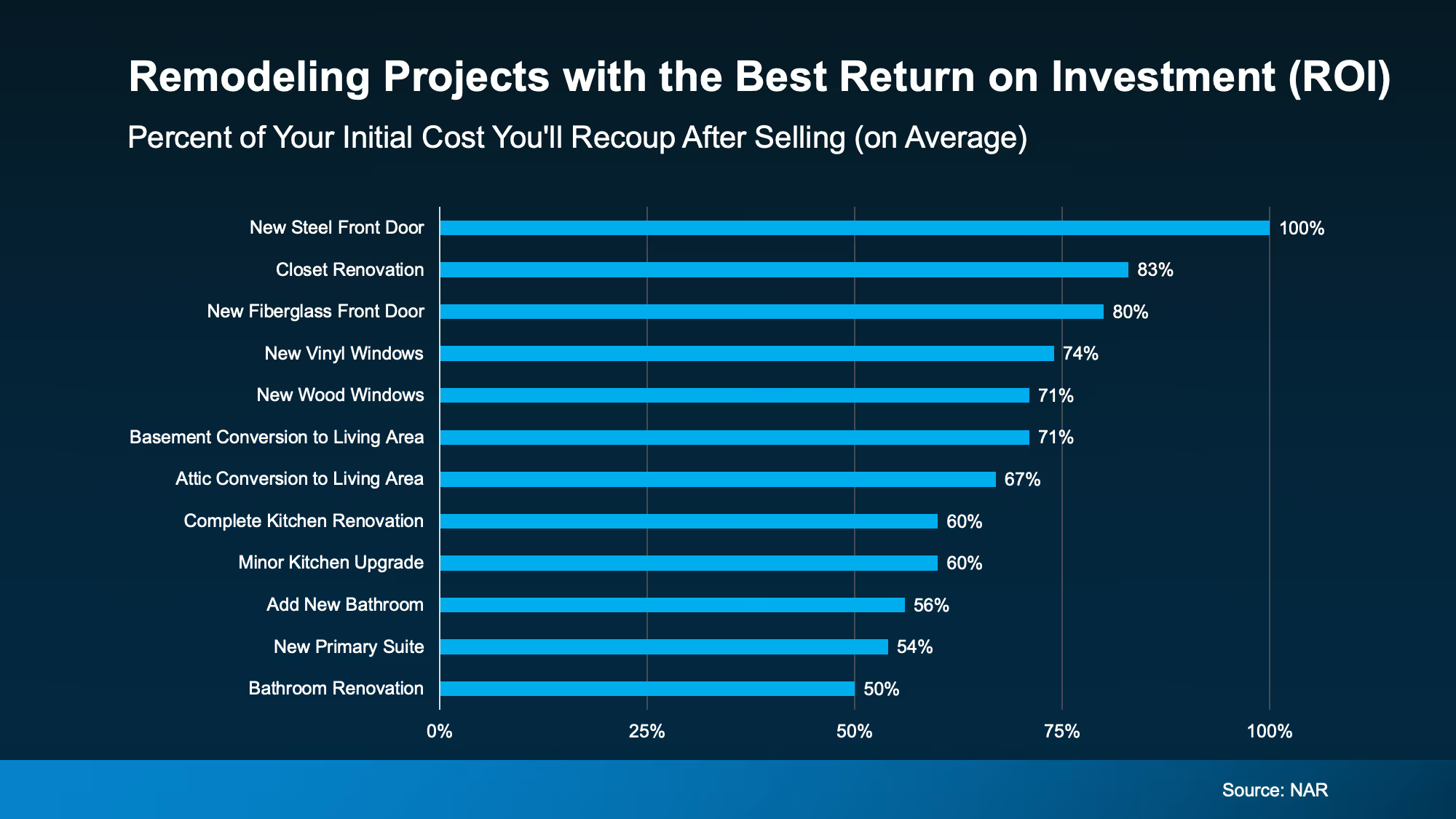
Bar graph showing which remodeling projects may deliver stronger resale value for homeowners planning updates before selling.
Remodeling ROI charts can be helpful because they show which projects have historically recovered more of their cost at resale.
But national ROI data cannot fully account for your specific home, price point, neighborhood, competition, buyer demand, or local condition issues.
For example, a front door replacement may show strong cost recovery, but that does not mean it should be funded with a home equity loan. It may be a small out-of-pocket project.
On the other hand, a larger kitchen or bath update may be expensive enough that equity becomes part of the conversation, but only if the improvement makes sense for the home’s likely value range.
The better approach is to combine data with local market judgment.
A $20,000 project on one home may be smart. The same $20,000 project on another home may be unnecessary.
Using home equity is a financial decision, not just a real estate decision.
Before moving forward, homeowners should understand the payment, interest rate, fees, repayment terms, & total cost. You also need to consider your loan-to-value ratio, especially if you may sell soon.
Borrowing against your home can make sense when the improvement is strategic & the numbers work. It can also create unnecessary risk if the project is mostly cosmetic, overbuilt for the neighborhood, or unlikely to improve your selling position.
If you are considering a larger renovation, it is wise to talk with a financial advisor or lender before committing to contractors.
The goal is not to spend the most money. The goal is to make the right improvements for your home, timeline, & expected return.
Home equity may give Tampa Bay homeowners more options than they realize, especially if they have owned their home for several years.
For sellers, the right improvements can help a home show better, compete more effectively, & reduce buyer concerns.
But not every project is worth doing before listing. Focus on updates that improve marketability, solve buyer objections, & fit the price point of your neighborhood.
Before using equity for a renovation, compare the project cost, likely buyer impact, resale value, & financial risk.
A smart renovation plan is not about doing everything. It is about investing where it counts.