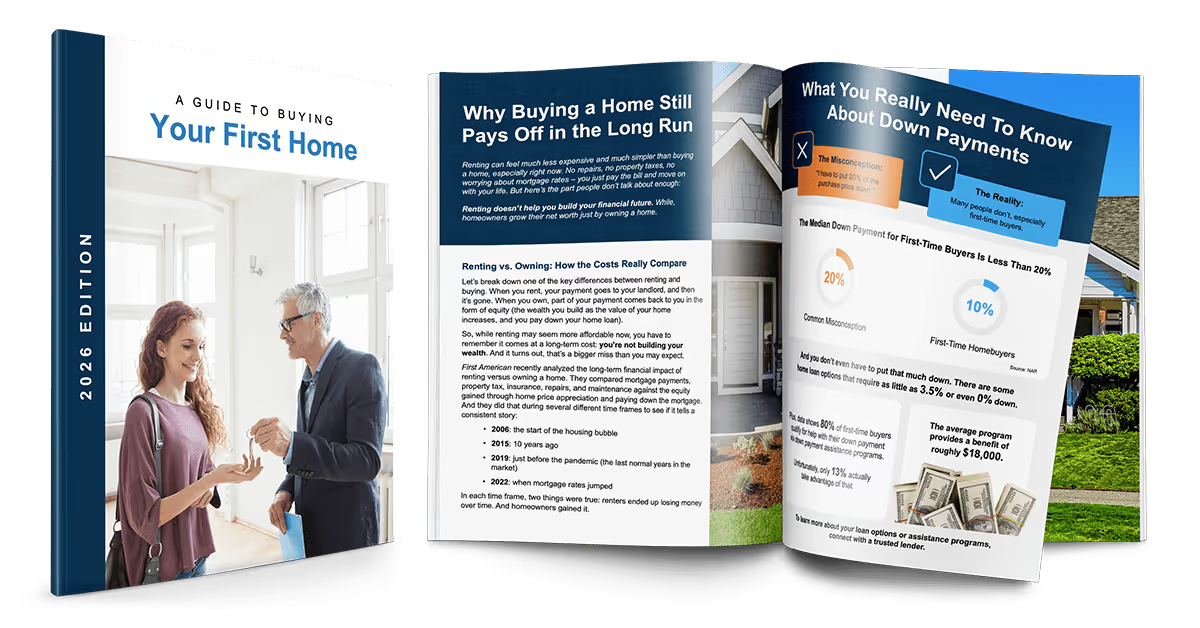
Buying your first home is exciting, but it can also feel overwhelming when you start thinking about financing, inspections, contracts, closing costs, insurance, and where you actually want to live.
That is especially true in the greater Tampa Bay area, where first-time buyers may be comparing very different options across Tampa, Riverview, Brandon, St. Petersburg, Largo, Palm Harbor, and other parts of Hillsborough and Pinellas counties.
The good news is that you do not need to know everything before you start. You need a clear plan, the right preparation, and a team that can help you make smart decisions before you get too deep into the process.
A first-time home buyer should not try to figure everything out alone. There are too many moving parts, and small mistakes can create delays, extra costs, or unnecessary stress.
The 2 most important people to connect with early are a knowledgeable real estate agent and a trusted lender. Your real estate agent helps you understand the buying process, compare neighborhoods, review homes, structure offers, negotiate terms, and keep track of contract deadlines.
Your lender helps you understand loan options, estimated monthly payments, cash needed to close, credit requirements, and what price range makes sense for your situation.
This matters because the Tampa Bay market can vary a lot by area. A buyer looking at townhomes in Riverview may have different costs, HOA fees, insurance considerations, and commute factors than a buyer looking at a single-family home in St. Petersburg or a condo in Pinellas County.
A good team helps you slow down, compare the full picture, and avoid making a decision based only on the list price.
Before you start touring homes, you need to understand what you can comfortably afford. That does not mean only looking at the maximum amount a lender may approve.
It means looking at your full monthly payment, your cash needed to close, your comfort level, and your long-term financial goals.
For many first-time buyers, the biggest mistake is focusing only on the down payment. The down payment matters, but it is only 1 part of the total cost.
You also need to plan for closing costs, inspections, appraisal fees, prepaid taxes, prepaid insurance, moving expenses, and any immediate repairs or furniture needs after closing.
In Florida, buyers should also pay close attention to homeowners insurance, flood zone considerations, HOA fees, CDD fees when applicable, and property taxes. These items can make 2 homes with the same purchase price feel very different from a monthly payment standpoint.
You should also ask your lender about loan options such as conventional, FHA, VA, and other programs that may fit your situation. Some first-time buyers may also qualify for down payment assistance, but those programs often have income limits, property requirements, location requirements, or specific lender guidelines.
Getting pre-approved early gives you a clearer price range and helps you avoid falling in love with a home before knowing whether it truly fits your budget. It also helps you move faster when the right home comes up, which can still matter in desirable neighborhoods and price ranges.
Once you start the mortgage process, your lender will need to verify your income, assets, debts, and financial history. Having your documents ready ahead of time can make the process smoother and reduce back-and-forth delays.
A good starting list includes:
Exact requirements can vary by lender, loan type, employment situation, and source of funds. For example, a self-employed buyer may need different documentation than a W-2 employee. A buyer using gift funds may need additional paperwork. A buyer applying for a VA loan may have a different checklist than someone using FHA or conventional financing.
The point is not to have every answer before you begin. The point is to get organized early so you can respond quickly when your lender asks for documents. That can help you avoid delays once you are under contract.
Buying your first home does not mean you need to have everything figured out from day 1. It means you need to take the process one step at a time.
Start by building the right team, understanding your budget, reviewing your loan options, and gathering the documents your lender will likely need.
For first-time buyers in the Tampa Bay area, preparation is especially important because monthly costs can vary based on location, insurance, taxes, HOA fees, flood zones, and property type.
When you understand those details upfront, you can shop with more confidence and make a better decision when the right home becomes available.