Many buyers start their home search with a clear picture of what they want.
Then they begin comparing prices, monthly payments, taxes, insurance, HOA fees, and available homes, and the options in their budget may be smaller than expected. That can feel frustrating at first, especially for buyers hoping for more space, a larger yard, or a more traditional single-family home.
But smaller does not automatically mean settling.
For many Tampa Bay buyers, a smaller home can be a smart way to stay within budget while still getting a strong location, a practical layout, newer features, or access to community amenities. In a market where affordability matters, the best move may be finding the right home instead of simply chasing more square footage.
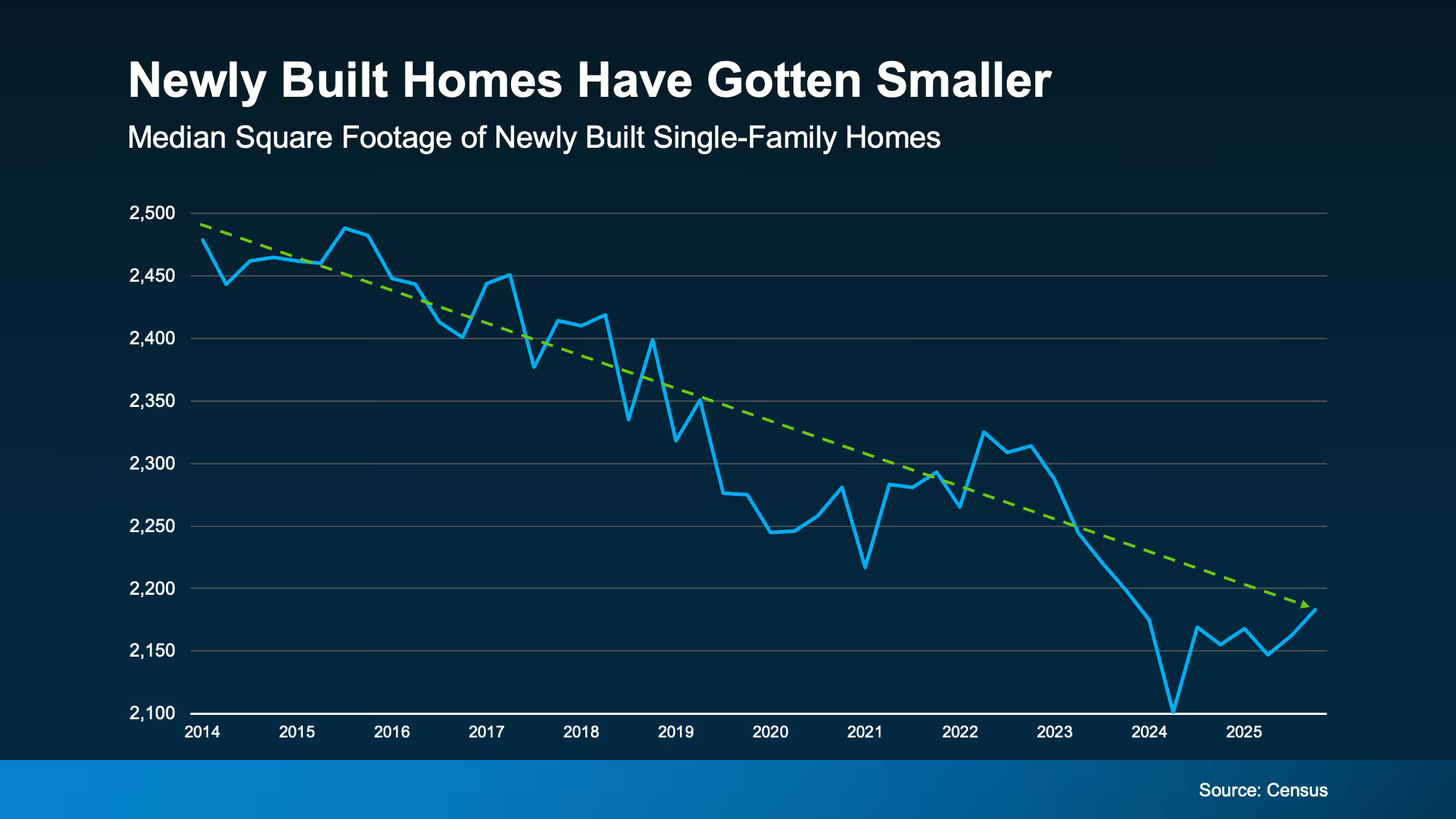
Newly built homes have been getting smaller overall for several years.
That shift is not random. Builders pay close attention to what buyers can afford and what homes are likely to sell. When higher prices, mortgage rates, insurance costs, and monthly payments put pressure on buyers, builders often respond by offering smaller floor plans, townhomes, paired villas, and more efficient layouts.
For buyers in areas like Tampa, Riverview, Brandon, St. Petersburg, Clearwater, Largo, Seminole, and surrounding communities, this can open up options that may not have been available in the resale market.
A smaller new construction home may still offer modern finishes, updated building standards, energy-efficient features, newer appliances, improved storage, and a layout designed for how people live today. In some cases, a slightly smaller home that is move-in ready may feel more functional than a larger home that needs major updates.
Square footage matters, but layout matters just as much.
A well-designed 1,600 sq ft home can live better than a poorly designed 2,000 sq ft home if the space is used wisely. Open living areas, split-bedroom layouts, flexible lofts, storage closets, kitchen islands, covered patios, and multi-use rooms can make a smaller footprint feel more comfortable and practical.
That is especially important for first-time buyers and move-up buyers trying to stay realistic in today’s market.
Instead of focusing only on total square footage, buyers should look closely at how the home functions day to day. Is there enough storage? Does the kitchen work for your lifestyle? Are the bedrooms separated in a way that makes sense? Is there room to work from home, host family, or grow into the space?
The right layout can make a smaller home feel more usable, easier to maintain, and more affordable over time.
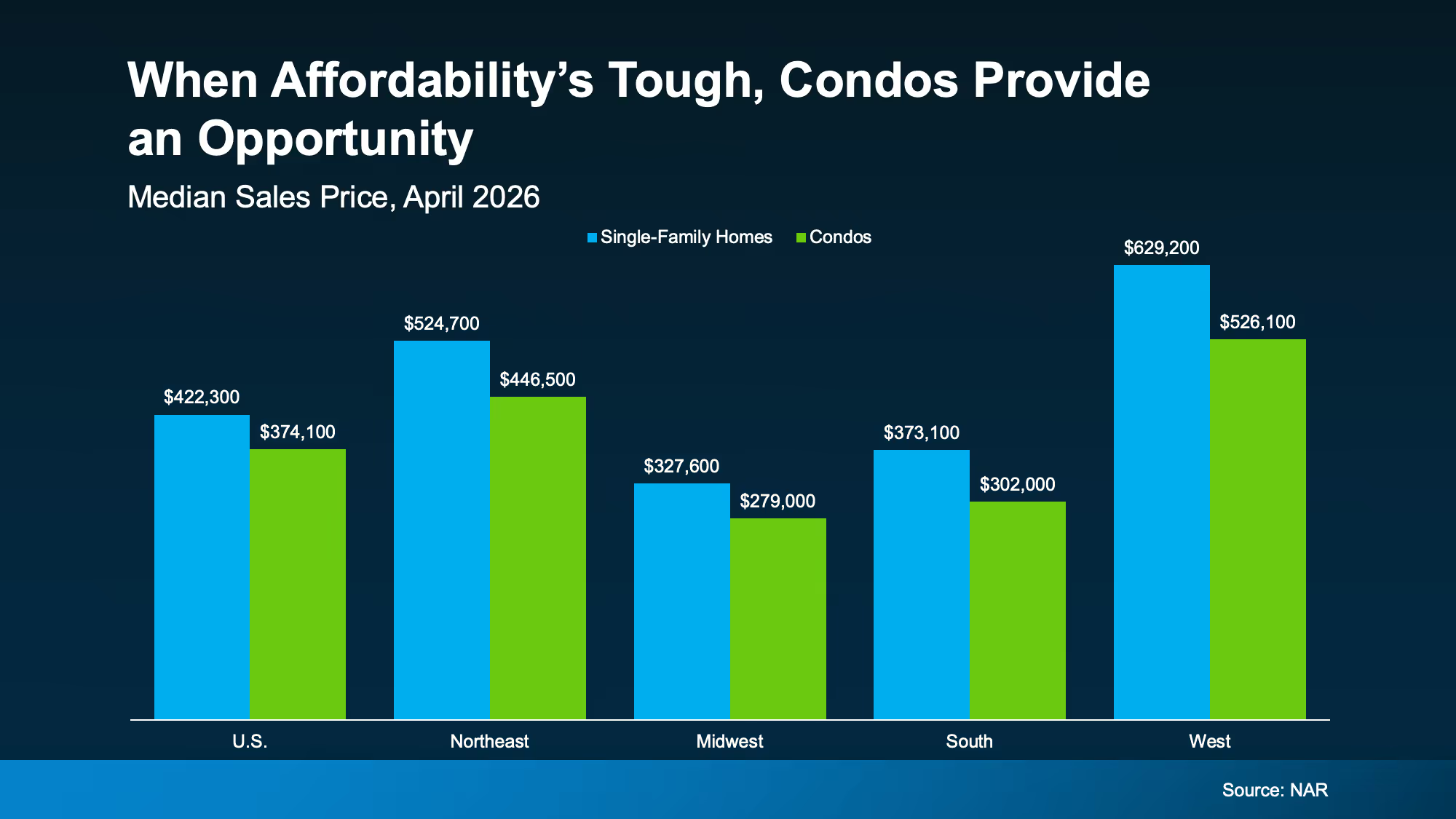
Condos and townhomes can also be worth considering, especially when single-family homes are stretching the budget too far.
In many markets, condos are priced lower than single-family homes because they are usually smaller and share some exterior or community responsibilities. That can give buyers a lower purchase price, a more manageable payment, and access to locations that might otherwise be out of reach.
For Tampa Bay buyers, this can be especially relevant in areas where land is limited or prices are higher, including parts of St. Petersburg, Tampa, Clearwater, Dunedin, Safety Harbor, and nearby coastal communities.
That said, condos and townhomes need careful review. Buyers should look beyond the purchase price and evaluate HOA fees, reserves, insurance, special assessments, maintenance responsibilities, rental restrictions, pet rules, parking, and financing requirements.
A condo or townhome can be a smart fit, but the full monthly cost and association health matter just as much as the list price.
One reason smaller homes can work so well is that the community may provide features the home itself does not.
Many newer neighborhoods and condo communities include amenities like pools, fitness centers, walking trails, dog parks, playgrounds, clubhouses, co-working spaces, outdoor gathering areas, and maintained common areas. Those features can make daily life feel larger than the home’s square footage suggests.
For example, a buyer who does not have room for a home gym may value a community fitness center. A buyer without a large yard may appreciate nearby green space, walking trails, or a community pool. A buyer working from home may benefit from a flexible loft, built-in workspace, or shared clubhouse area.
The key is to compare the total lifestyle, not just the size of the floor plan.
A smaller home can be a smart move, but it should still fit your real needs.
Before deciding, think about your lifestyle today and how it may change over the next few years. Consider work schedules, family plans, pets, storage, guests, hobbies, parking, outdoor space, and whether the location helps or hurts your daily routine.
Buyers should also compare the long-term cost.
A smaller home may come with a lower purchase price, but the total monthly payment still depends on taxes, insurance, HOA fees, flood zone, maintenance, utilities, and financing terms. In Florida, those details can significantly affect affordability, so they should be reviewed before making an offer.
The goal is not to buy less just to buy something. The goal is to find a home that gives you the best combination of price, location, condition, layout, and lifestyle.
Smaller homes, condos, and townhomes can offer real advantages for buyers who want to stay practical in today’s market.
Less square footage may mean a more affordable purchase price, lower maintenance, newer features, better location, or access to amenities that improve everyday living. For many Tampa Bay buyers, the right smaller home can be a better fit than stretching too far for a larger one.
The smartest purchase is not always the biggest house.
It is the home that fits your budget, supports your lifestyle, and gives you a clear path forward without taking on more than you can comfortably handle.